Why Are Flamingos Pink? Food, Pigments and Feather Make-Up
Flamingos are born grey, not pink. Their colour comes from pigments in algae and shrimp, and some even apply “make-up”. The science behind the pink bird.

Short answer
Flamingos are pink because of carotenoid pigments in their food. Algae and cyanobacteria in salty lakes make these orange-red pigments, brine shrimp and other small animals eat them, and flamingos filter both from the water. Enzymes in the bird’s liver convert the pigments and deposit them in growing feathers, skin and egg yolks. Chicks hatch grey-white and only turn pink over a few years, and birds that stop eating carotenoids gradually fade.
In this article (7)
A flock of flamingos on a lake looks almost too pink to be real. Yet no flamingo is born that colour. The famous pink is borrowed, one mouthful at a time, from the tiny living things in the water. Flamingos are a living example of the saying “you are what you eat”.
Pink from the bottom of the food chain
The colour comes from a family of pigments called carotenoids. They are the same pigments that make carrots orange, tomatoes red and egg yolks yellow. Animals cannot make carotenoids themselves; they have to eat them.
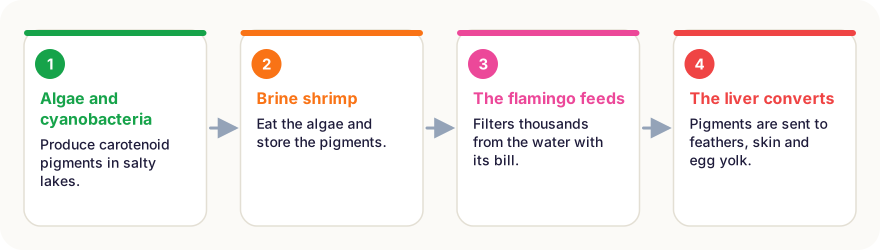
In the salty, shallow lakes where flamingos feed, carotenoids are produced by algae and cyanobacteria. Small creatures such as brine shrimp eat the algae and store the pigments in their bodies, which is why brine shrimp are often reddish themselves.
A bill built like a sieve
Flamingos feed with their heads upside down. They sweep their bent bills through the water, and comb-like plates along the edges, called lamellae, trap shrimp, algae and seeds while the tongue pumps water out. A lesser flamingo can filter enormous amounts of water this way every day.
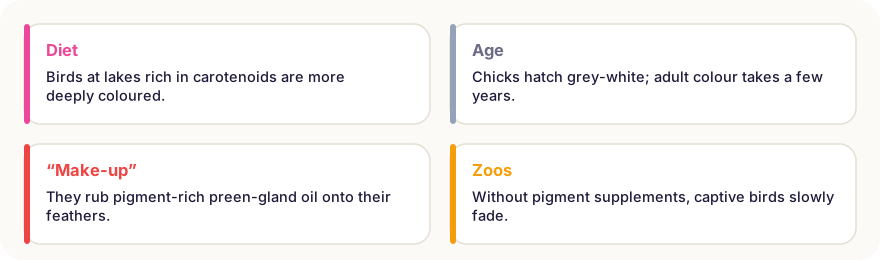
Once eaten, the carotenoids are absorbed in the gut and processed by enzymes in the liver. The modified pigments are carried in fats in the blood to the skin, to the growing feathers and to egg yolks. The more carotenoids a bird eats, the deeper its colour. Flamingos at some lakes are pale pink, others rich coral or crimson.
Born grey, pink later
Flamingo chicks hatch covered in grey or white down. For the first weeks both parents feed them a red, fat-rich fluid called crop milk, produced in the parents’ digestive tract and coloured by the same carotenoids. Making it can even make the parents paler for a while.
It takes young flamingos two to three years to reach full adult colour. Until then their grey feathers are gradually replaced by pink ones as the pigments build up.
Flamingos wear make-up
In 2010 Juan Amat and colleagues reported a surprising behaviour in greater flamingos. Birds rub their heads near a gland at the base of the tail, the uropygial or preen gland, and then spread the oily secretion over their neck and wing feathers. This oil is full of carotenoids.
The flamingos applied it more often during the breeding season, and the effect faded within days, so they had to keep re-applying it. The researchers described it as make-up: a way to look pinker than their diet alone would allow, because brighter birds tend to find mates sooner.
Why bother being pink?
Colour is a signal. A deep pink flamingo shows that it has found good feeding grounds and is healthy enough to collect lots of pigment. During group courtship displays, in which hundreds of birds march, head-flag and wing-salute together, the brightest birds are often the most successful.
In zoos the link is easy to see. In the past, captive flamingos fed ordinary diets slowly turned white. Today zoos add carotenoids such as canthaxanthin or beta-carotene to their food to keep them pink.
What about standing on one leg?
Flamingos often rest on a single leg, sometimes for hours. Several explanations have been suggested, and the question is not fully settled. In 2017 Young-Hui Chang and Lena Ting showed that a flamingo’s body is arranged so that it can balance on one leg with very little active muscle force, even when the bird is asleep. Standing on one leg may therefore be an energy-saving posture. It may also help reduce heat loss through the bare legs in cold water.
In short
- Flamingos are pink because of carotenoid pigments made by algae and cyanobacteria.
- They get them by eating brine shrimp and algae, filtered through their sieve-like bills.
- The liver processes the pigments and sends them to feathers, skin and egg yolks.
- Chicks hatch grey and turn pink over two to three years.
- Greater flamingos apply carotenoid-rich preen oil like make-up in the breeding season.
- Without carotenoids in their food, flamingos slowly fade.
Frequently asked questions
Are flamingo chicks pink?
No. Chicks hatch with grey or white down and grey bills and legs. They gain their adult pink colour gradually over two to three years as they eat a carotenoid-rich diet.
Would a flamingo turn white if it stopped eating shrimp?
Over time, yes. New feathers would grow in much paler. That is why zoos add carotenoid pigments such as canthaxanthin or beta-carotene to flamingo food.
Why do flamingos stand on one leg?
The reason is still debated. A 2017 study found that a flamingo’s body can balance on one leg with little muscle effort, so the posture may save energy; it may also reduce heat loss through the legs.
How many species of flamingo are there?
There are six species. The greater flamingo is the most widespread and lives in parts of Africa, southern Europe, Turkey and Asia; the lesser flamingo is the most numerous.
Sources
- Amat, J. A. et al. (2010). Greater flamingos Phoenicopterus roseus use uropygial secretions as make-up. Behavioral Ecology and Sociobiology
- Chang, Y.-H. & Ting, L. H. (2017). Mechanical evidence that flamingos can support their body on one leg with little active muscular force. Biology Letters
- Smithsonian’s National Zoo – American flamingo
This article is based on peer-reviewed research and publications from trusted institutions, and it is reviewed regularly. How we work →
You might also wonder
All in Animals →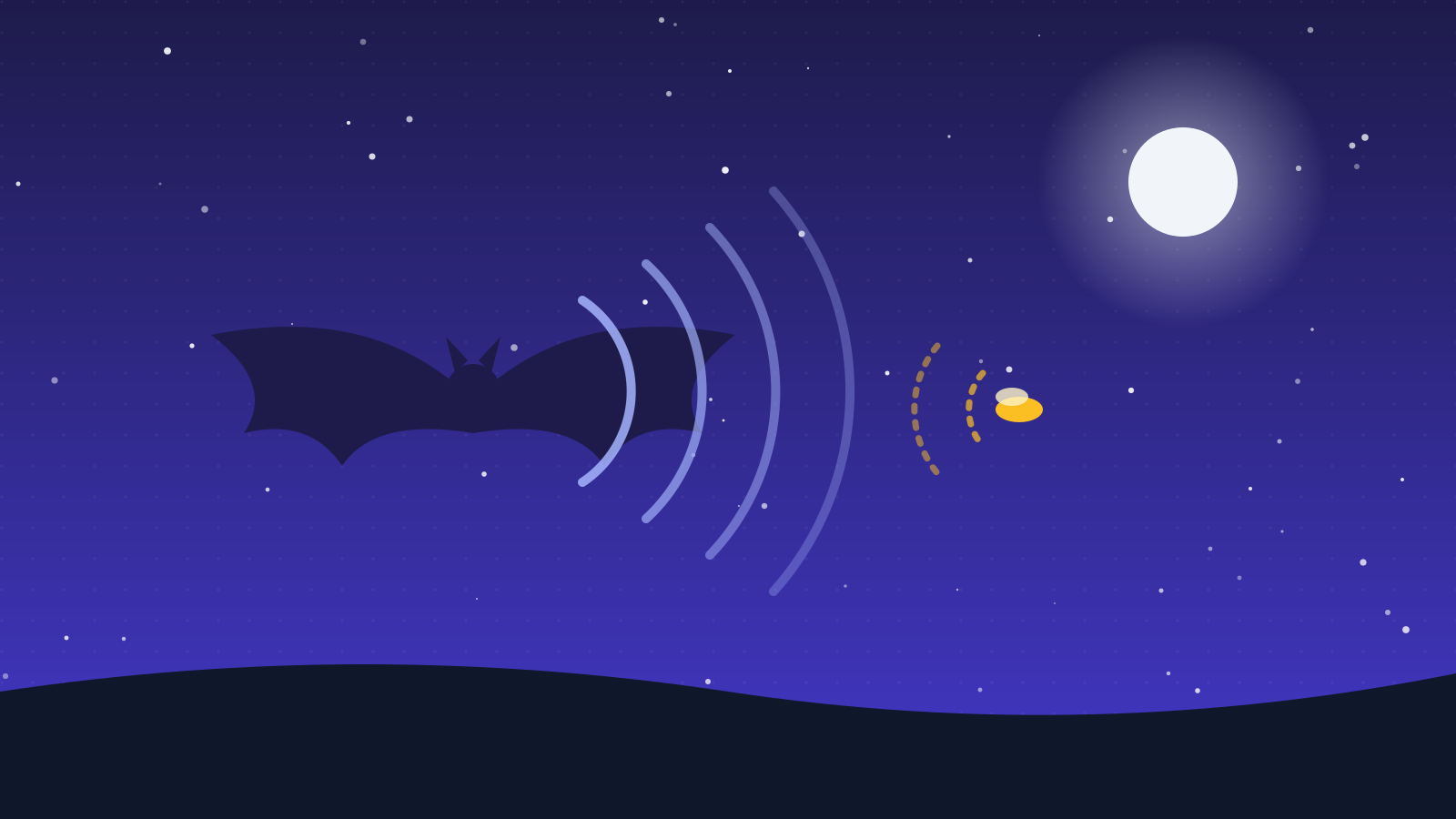
How Do Bats See in the Dark? Echolocation Explained
Bats are not blind, but many hunt in total darkness by listening to echoes. How echolocation works, how fast bats call, and how moths fight back.
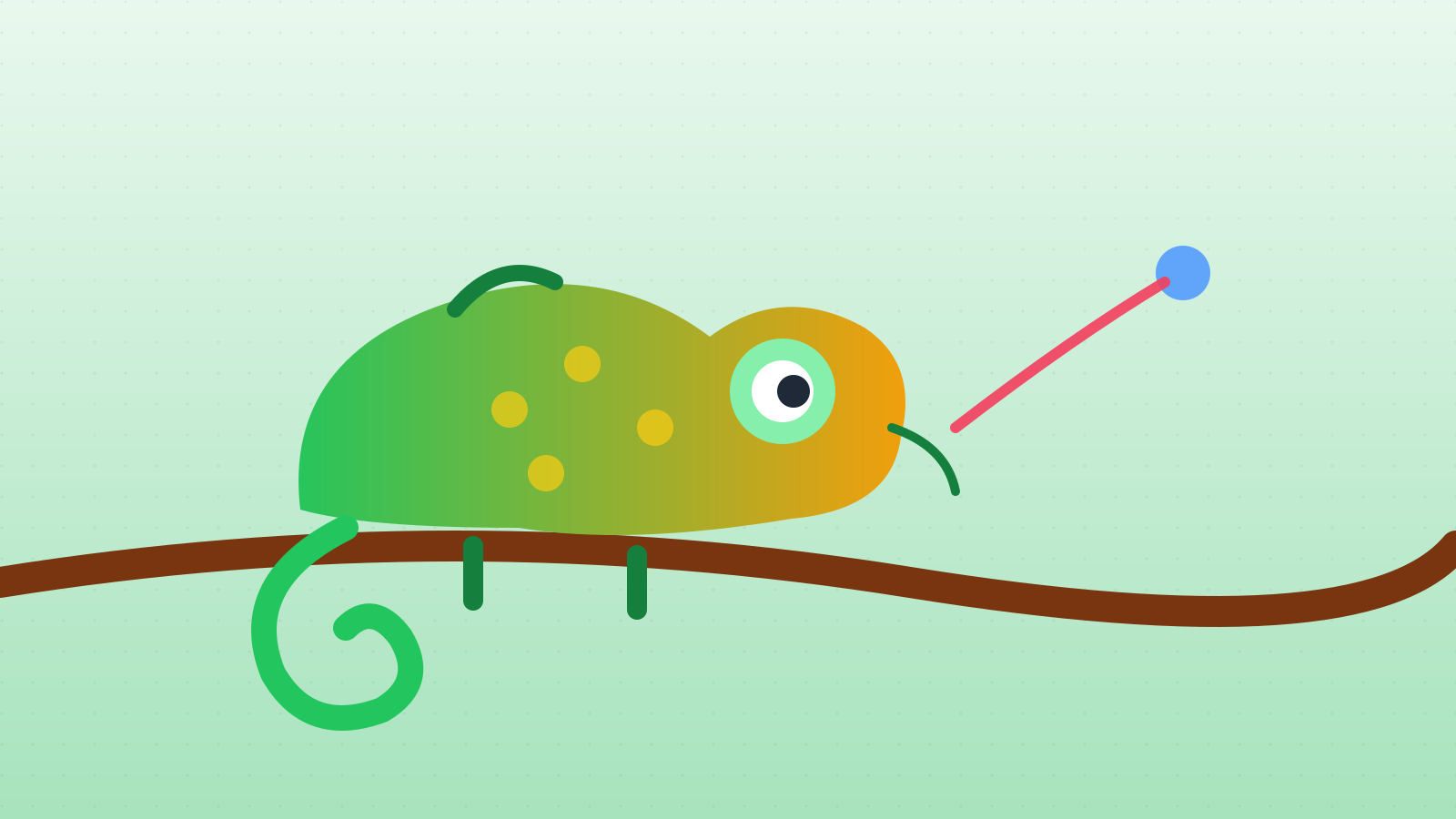
How Do Chameleons Change Colour? Nanocrystals, Not Pigments
Chameleons don’t change colour mainly to hide. They tune tiny crystals in their skin to signal mood, warn rivals and control temperature. How the trick works.
How Do Fireflies Glow? The Chemistry of Living Light
Fireflies make light without heat using a chemical reaction in their tails. How does bioluminescence work, how is it switched on and off, and why do they flash?
Why Do Octopuses Have Three Hearts? Blue Blood and Arms That Think
Why do octopuses have three hearts, why is their blood blue and how can their arms “think”? The science behind the body of the ocean’s strangest intelligence.

Why Do Cats Purr? How Purring Works and What It Means
Do cats only purr when they are happy? How purring is produced in the larynx, what new research revealed, and what your cat may actually be telling you.

Why Do Dogs Wag Their Tails? The Hidden Meanings of Tail Language
Does a wagging tail always mean a happy dog? What the height, speed and even the left–right direction of a dog’s wag reveal, according to research.