Why Do Octopuses Have Three Hearts? Blue Blood and Arms That Think
Why do octopuses have three hearts, why is their blood blue and how can their arms “think”? The science behind the body of the ocean’s strangest intelligence.
Short answer
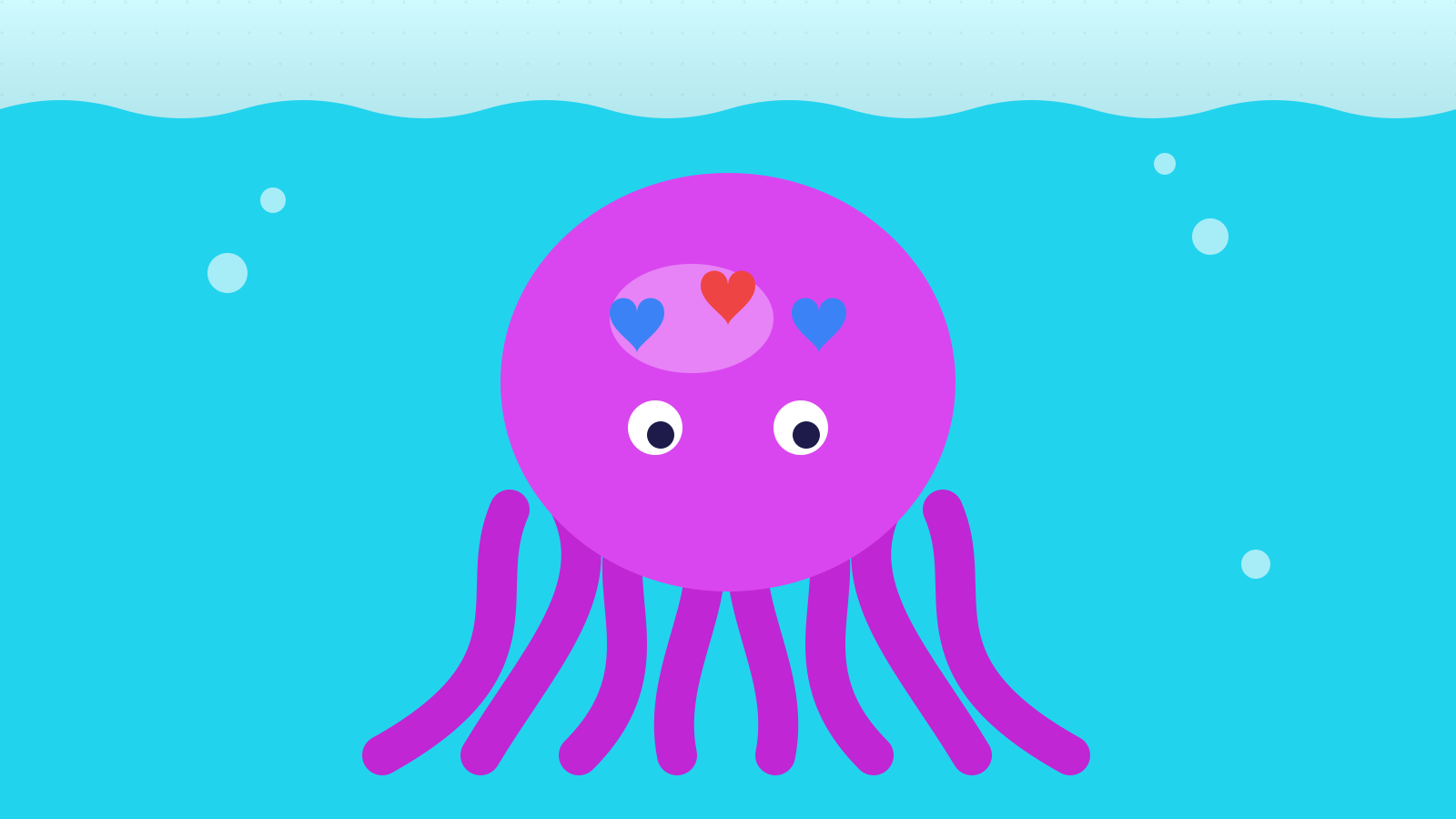
Octopus blood carries oxygen with a copper-based protein called haemocyanin, which is less efficient than our haemoglobin. To compensate, two small hearts pump blood through the gills to pick up oxygen, while a third, larger heart pumps that oxygen-rich blood around the body. The copper in haemocyanin is also what makes octopus blood blue.
In this article (8)
Three hearts, blue blood, eight arms that can make their own decisions and skin that changes colour in seconds: octopuses are among the strangest creatures on Earth. Behind each of these features lies a clever evolutionary answer to the challenges of life in the ocean.
How the three hearts share the work
An octopus’s hearts do not all do the same job. Each has a specific role:
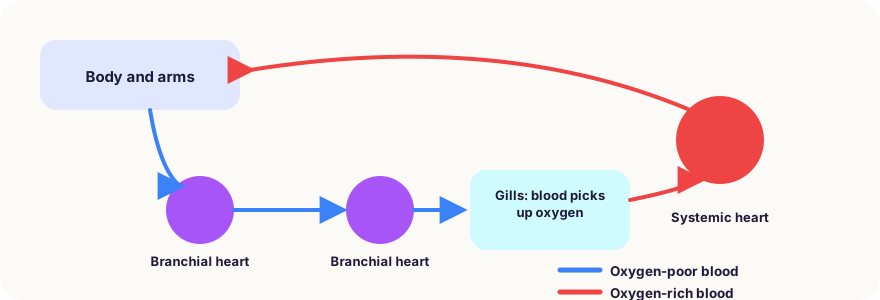
- Two branchial hearts: one sits at the base of each gill. They pump oxygen-poor blood returning from the body through the gills, where it picks up oxygen from the water.
- One systemic heart: this larger heart sends the oxygen-rich blood from the gills to the arms, brain and other organs.
Our own heart actually does two jobs in a similar way: the right side pumps blood to the lungs and the left side pumps it around the body. In the octopus, those two tasks are split between physically separate hearts.
Why so many pumps?
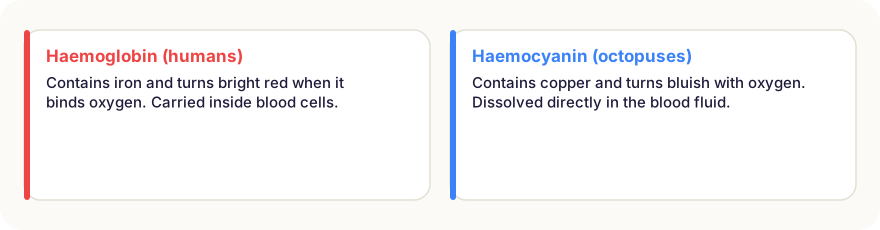
The answer lies in octopus blood. In our blood, oxygen is carried by haemoglobin, which contains iron. In octopuses the job is done by haemocyanin, which contains copper.
Haemocyanin has some drawbacks:
- It cannot carry as much oxygen as haemoglobin.
- It is not packed inside red blood cells but dissolved directly in the blood fluid, which makes the blood thicker and harder to pump.
Circulating blood that carries less oxygen and flows less easily requires a more powerful pumping system. Because pushing blood through the gills adds extra resistance, the octopus seems to have divided the load between separate hearts.
Haemocyanin has an advantage too: it is thought to work better than haemoglobin in cold, low-oxygen water, where many octopus species live.
Why is their blood blue?
When the iron in haemoglobin binds oxygen, it turns our blood red. When the copper in haemocyanin binds oxygen, it turns blue. Octopus blood that has given up its oxygen is almost colourless, but after passing through the gills and loading up with oxygen it turns distinctly blue.
The heart that stops when swimming
One of the most remarkable things about octopuses is that their systemic heart stops while they swim. To escape quickly, an octopus squirts water from its body and jets away — and during that time its main heart stops beating for a while.
That explains why octopuses usually prefer to crawl across the seabed on their arms. Swimming tires them out quickly and is not something they can keep up for long.
The “nine brains” myth and arms that think
The octopus nervous system is just as unusual as its hearts. An octopus has around 500 million nerve cells, roughly as many as a dog — but about two-thirds of them are in the arms, not the brain.
Each arm contains large clusters of nerve cells that control much of its movement on their own. For example:
- An arm can catch a crab and pass it towards the mouth without detailed instructions from the central brain.
- Thanks to sensors in their suckers, arms can taste and smell what they touch.
- Even an arm separated from the body keeps responding to touch for a while.
That is why people say octopuses have “nine brains”. A more accurate description is one central brain plus powerful, partly independent nerve networks in the arms.
Unusual genes as well
In 2015 a study in Nature described the octopus genome in detail for the first time. Researchers found that a gene family called protocadherins, involved in wiring nerve cells together, had expanded enormously in octopuses — to more than twice the number found in mammals. The finding sheds light on how octopuses evolved complex nervous systems and problem-solving skills.
Clever but short-lived
Octopuses can open jars, solve mazes, escape from aquariums and carry coconut shells around as portable shelters. Yet despite this intelligence, most species live only one to two years.
After laying their eggs, females guard them for weeks or even months and stop eating, dying soon after the young hatch. This short life means octopuses cannot pass on what they learn to the next generation — every octopus has to discover the world almost from scratch.
In short
An octopus’s three hearts make up for the less efficient oxygen transport of its copper-based blue blood: two hearts push blood through the gills and the third pumps it around the body. With a nervous system spread through its arms and an extraordinary genome, the octopus shows that an evolutionary path that split from ours hundreds of millions of years ago could produce a completely different kind of intelligence.
Frequently asked questions
Is it true that octopuses have nine brains?
Not exactly. An octopus has one central brain, plus large clusters of nerve cells in each arm that control much of the arm’s movement on their own. That is why people often talk of “nine brains”.
Why is octopus blood blue?
The oxygen-carrying protein haemocyanin contains copper. When copper binds oxygen the blood turns blue; without oxygen it is almost colourless.
How long do octopuses live?
Most species live only one to two years. Females stop eating while guarding their eggs and usually die soon after the young hatch.
Do squid and cuttlefish have three hearts too?
Yes. Cephalopods such as octopuses, squid and cuttlefish all have three hearts and blue blood.
Sources
- Albertin et al. (2015) – The octopus genome and the evolution of cephalopod neural and morphological novelties, Nature
- Natural History Museum – Octopuses keep surprising us: eight examples of how
This article is based on peer-reviewed research and publications from trusted institutions, and it is reviewed regularly. How we work →
You might also wonder
All in Animals →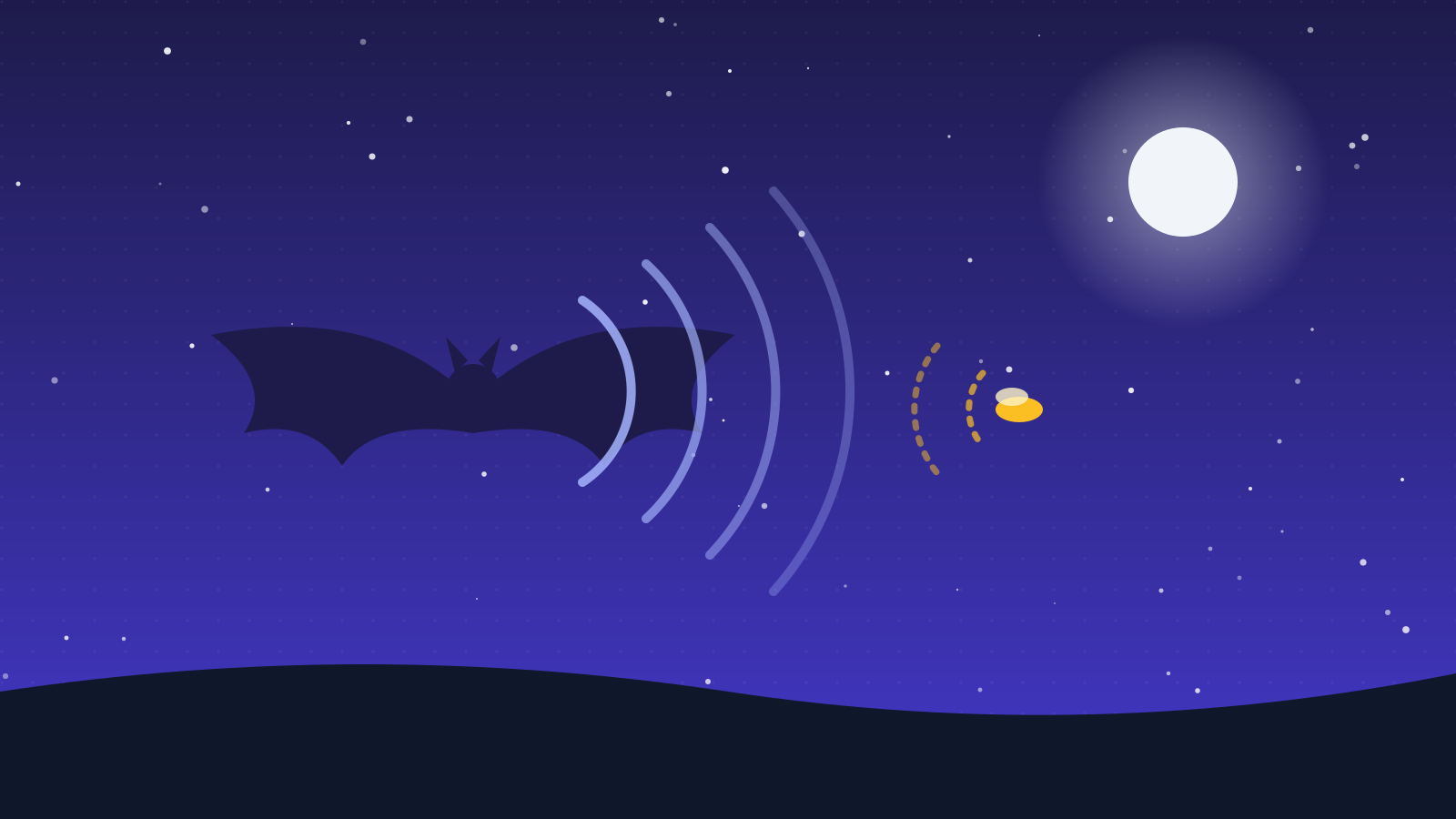
How Do Bats See in the Dark? Echolocation Explained
Bats are not blind, but many hunt in total darkness by listening to echoes. How echolocation works, how fast bats call, and how moths fight back.
How Do Chameleons Change Colour? Nanocrystals, Not Pigments
Chameleons don’t change colour mainly to hide. They tune tiny crystals in their skin to signal mood, warn rivals and control temperature. How the trick works.

How Do Fireflies Glow? The Chemistry of Living Light
Fireflies make light without heat using a chemical reaction in their tails. How does bioluminescence work, how is it switched on and off, and why do they flash?
Why Are Flamingos Pink? Food, Pigments and Feather Make-Up
Flamingos are born grey, not pink. Their colour comes from pigments in algae and shrimp, and some even apply “make-up”. The science behind the pink bird.
How Can Owls Turn Their Heads So Far? The Secrets of a 270° Neck
Owls turn their heads about 270 degrees without cutting off blood to the brain. Why they need to, and the neck bones and vessels that make it possible.
How Do Dolphins Sleep? Half a Brain at a Time
Dolphins sleep with half the brain while the other half stays awake and one eye stays open. Why they can’t fully switch off, and who else does it.