How Good Is a Dog’s Sense of Smell? The Nose That Smells in Parts per Trillion
Dogs have hundreds of millions of smell receptors and a nose built for sniffing. How their noses work, what they can detect and why they sniff everything.

Short answer
A dog’s sense of smell is vastly better than ours. Dogs have roughly 200 to 300 million olfactory receptors, compared with about 5 to 6 million in humans, and the part of their brain devoted to smell is proportionally much larger. Their noses are also built differently: when a dog sniffs, part of the air is diverted to a special chamber lined with smell tissue, and it breathes out through side slits so that new scents are not blown away. In one study, dogs detected an odour at concentrations of about 1 to 2 parts per trillion. That is why dogs can track people, find explosives and even detect some diseases.
In this article (5)
Take a dog for a walk and watch it read the world through its nose: every lamppost, patch of grass and gatepost is a newspaper full of stories. We live in a world of sight; dogs live in a world of smell. Just how good are their noses?
Hundreds of millions of sensors
Smell begins with olfactory receptors, special nerve cells high inside the nose that recognise odour molecules. Humans have about 5 to 6 million of them. Dogs have an estimated 200 to 300 million, depending on the breed.

The difference continues in the brain. The olfactory bulb, which processes smell signals, takes up a much larger share of a dog’s brain than ours. And dogs have a second smell organ, the vomeronasal organ, tuned to chemical signals from other animals.
How sensitive does that make them? In a 2006 study, researchers trained dogs to detect a fruity-smelling chemical and gradually lowered its concentration. The dogs could still pick it out at about 1 to 2 parts per trillion, comparable to finding a few drops of liquid in an Olympic swimming pool.
A nose built for sniffing
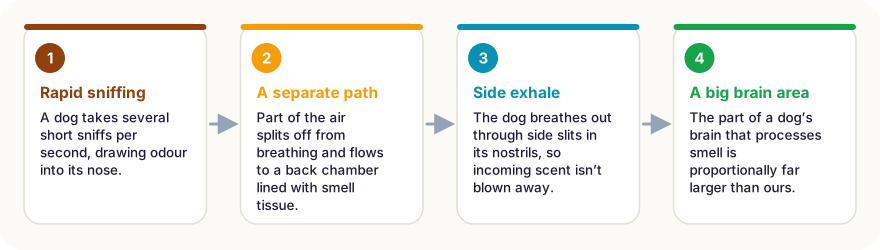
In 2010, a team led by engineer Brent Craven built a detailed 3D model of a dog’s nose from scans and simulated the airflow inside. They found several clever design features:
- When a dog sniffs, part of the incoming air splits off from the breathing path and flows into a chamber at the back of the nose, packed with smell tissue. There, odour molecules can linger.
- A dog takes several short sniffs per second, pulling in fresh scent each time.
- When it breathes out, the air leaves through slits at the sides of the nostrils. This creates a swirl that helps draw in more air from in front, and avoids blowing away the scent it is trying to follow.
Dogs can also smell with each nostril separately, which helps them tell which direction a scent is coming from.
What dogs can do with their noses
This super-sense makes dogs remarkable partners:
- Tracking: scent hounds such as bloodhounds can follow a person’s trail long after they have passed.
- Detection: dogs find explosives, drugs, banned foods at airports, bed bugs and missing people under snow or rubble.
- Medicine: in studies, trained dogs have detected signs of some cancers, low blood sugar in people with diabetes and some infections. Dogs do not replace medical tests, but they inspire research into “electronic noses”.
Why dogs sniff everything
For a dog, sniffing is reading. Urine marks, footprints and the scent glands of other dogs carry information about who passed by, when, and whether they were male or female, healthy or stressed. That is why sniffing walks are mentally tiring and satisfying for dogs, and why letting them sniff is good for their welfare.
In short
- Dogs have about 200–300 million smell receptors; humans have about 5–6 million.
- A large part of a dog’s brain is devoted to processing smells.
- In tests, dogs detected odours at about 1–2 parts per trillion.
- Sniffing sends air into a special smell chamber; dogs breathe out through side slits.
- Dogs can smell with each nostril separately to locate a scent.
- Their noses help track people, find explosives and even detect some diseases.
Frequently asked questions
How many times better is a dog’s nose than a human’s?
Estimates range from 10,000 to 100,000 times more sensitive, depending on the odour and how it is measured. Such numbers are rough, but there is no doubt that dogs detect smells at far lower concentrations than we can.
Which dog breed has the best sense of smell?
Scent hounds such as bloodhounds, basset hounds and beagles are famous trackers. Bloodhounds are thought to have among the most smell receptors and are used to follow trails days old.
Can dogs smell diseases?
Trained dogs have been shown to detect signs of some cancers, low blood sugar in people with diabetes and certain infections from samples of breath, sweat or urine. They are used as a research tool and early warning, not as a replacement for medical tests.
Why do dogs sniff each other’s bottoms?
Glands near the tail release chemical signals that carry information about the other dog, such as its sex, health and mood. Sniffing is the dog version of introducing yourself.
Sources
- Walker, D. B. et al. (2006). Naturalistic quantification of canine olfactory sensitivity. Applied Animal Behaviour Science
- Craven, B. A. et al. (2010). The fluid dynamics of canine olfaction: unique nasal airflow patterns as an explanation of macrosmia. Journal of the Royal Society Interface
This article is based on peer-reviewed research and publications from trusted institutions, and it is reviewed regularly. How we work →
You might also wonder
All in Animals →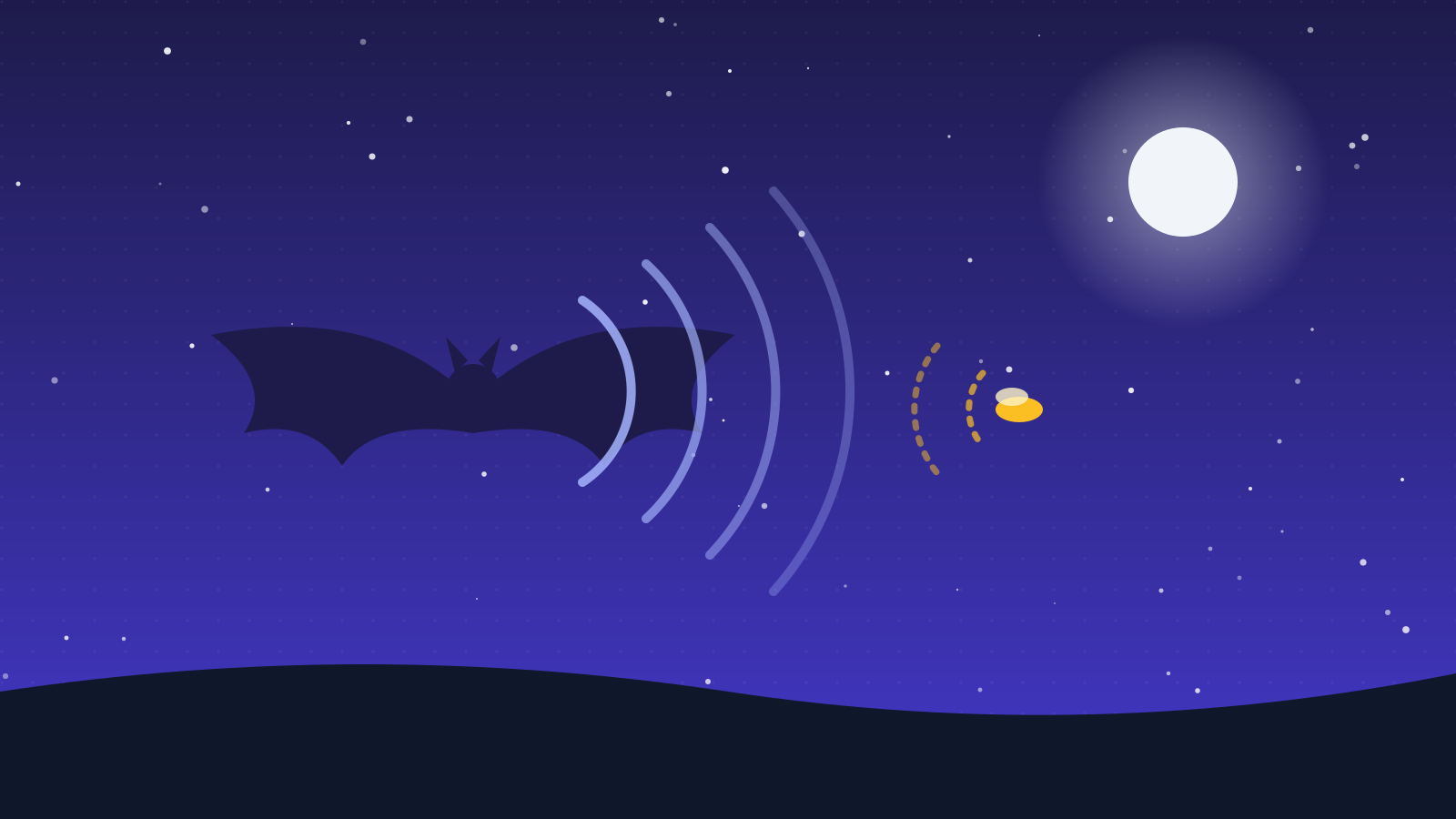
How Do Bats See in the Dark? Echolocation Explained
Bats are not blind, but many hunt in total darkness by listening to echoes. How echolocation works, how fast bats call, and how moths fight back.
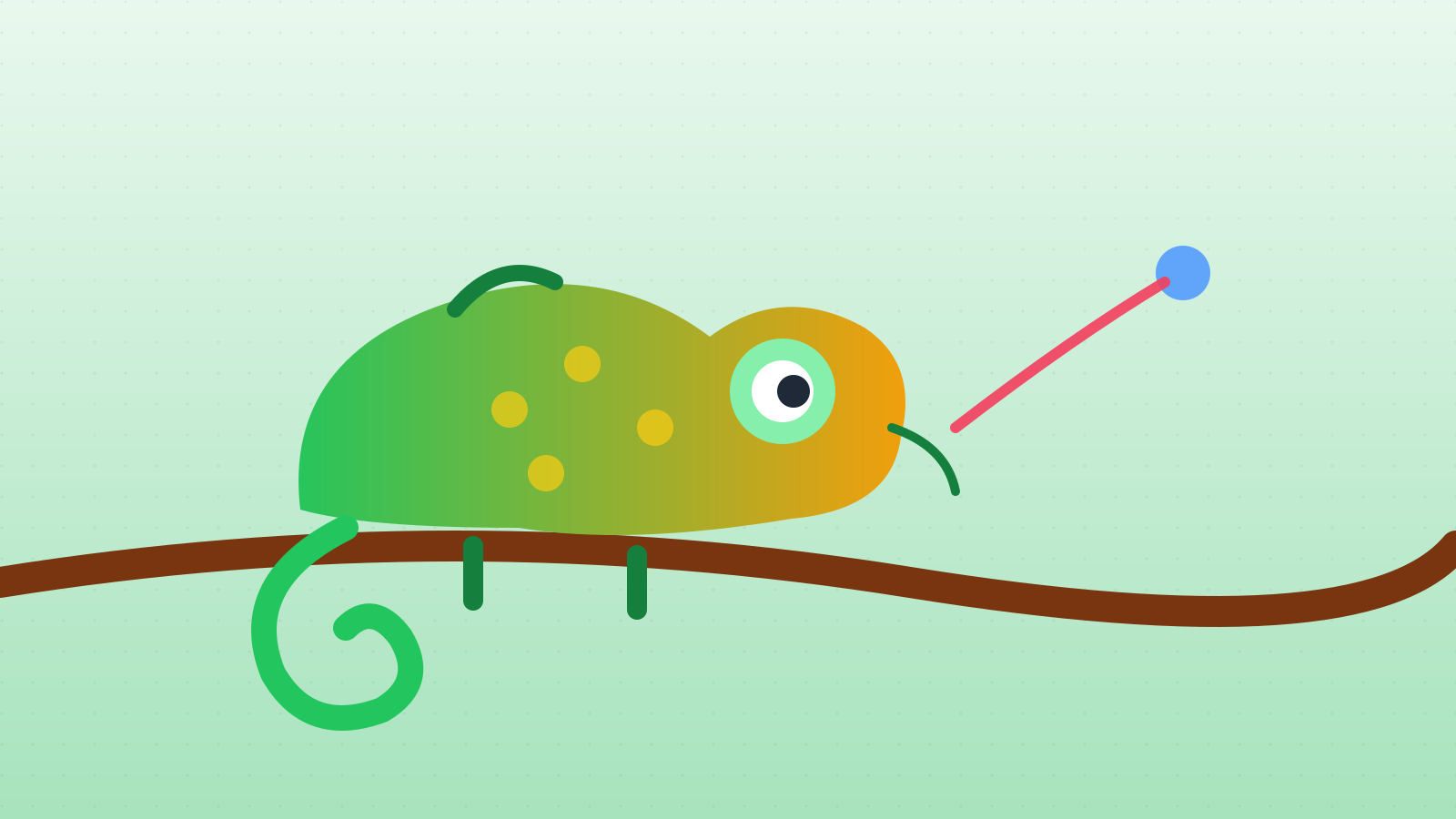
How Do Chameleons Change Colour? Nanocrystals, Not Pigments
Chameleons don’t change colour mainly to hide. They tune tiny crystals in their skin to signal mood, warn rivals and control temperature. How the trick works.

How Do Fireflies Glow? The Chemistry of Living Light
Fireflies make light without heat using a chemical reaction in their tails. How does bioluminescence work, how is it switched on and off, and why do they flash?

Why Are Flamingos Pink? Food, Pigments and Feather Make-Up
Flamingos are born grey, not pink. Their colour comes from pigments in algae and shrimp, and some even apply “make-up”. The science behind the pink bird.
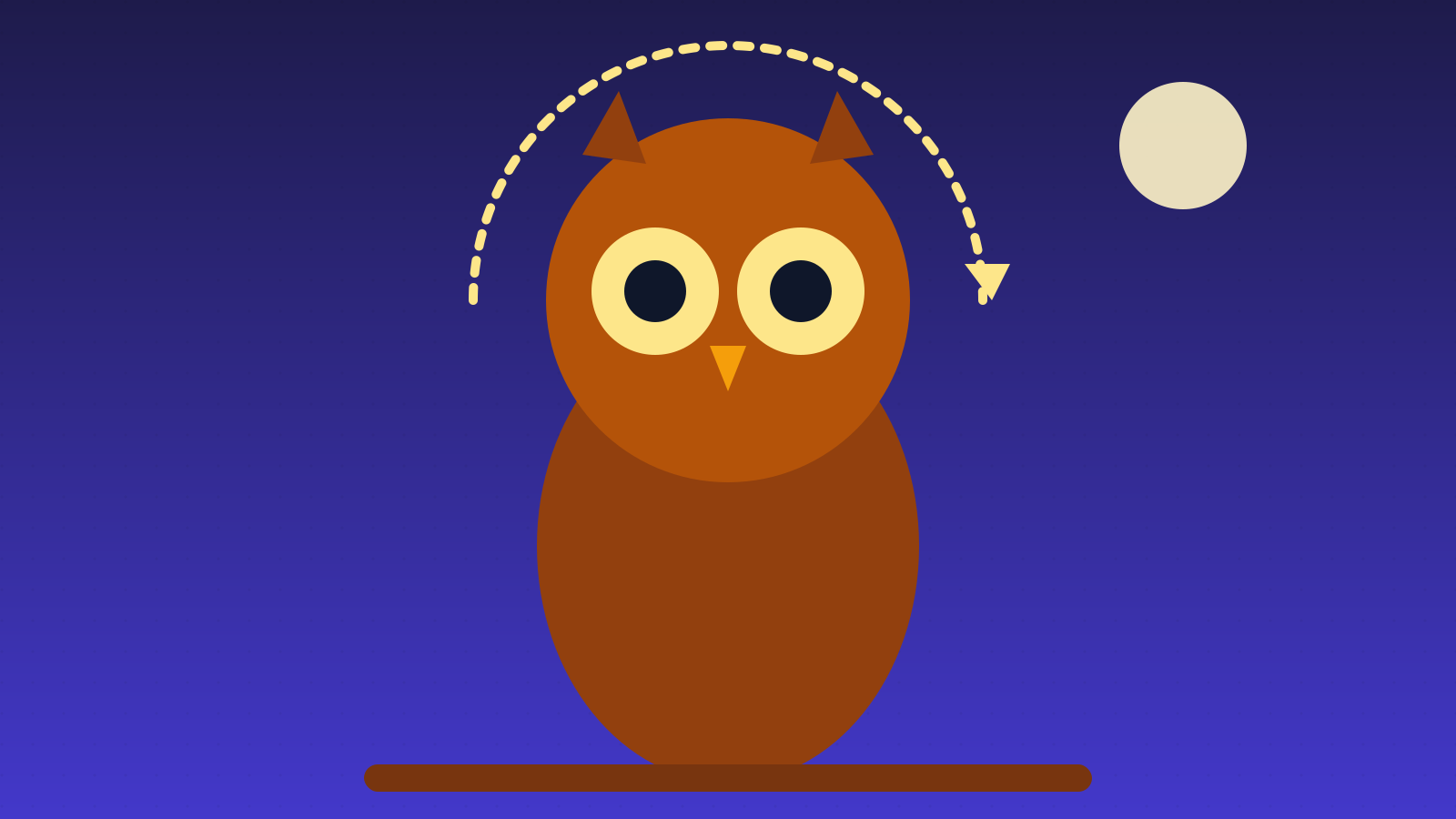
How Can Owls Turn Their Heads So Far? The Secrets of a 270° Neck
Owls turn their heads about 270 degrees without cutting off blood to the brain. Why they need to, and the neck bones and vessels that make it possible.
How Do Dolphins Sleep? Half a Brain at a Time
Dolphins sleep with half the brain while the other half stays awake and one eye stays open. Why they can’t fully switch off, and who else does it.