Why Do Apples Turn Brown? Enzymatic Browning and How to Stop It
A cut apple turns brown within minutes because an enzyme reacts with oxygen. What happens, why lemon juice helps, and whether brown apple is safe to eat.
Short answer
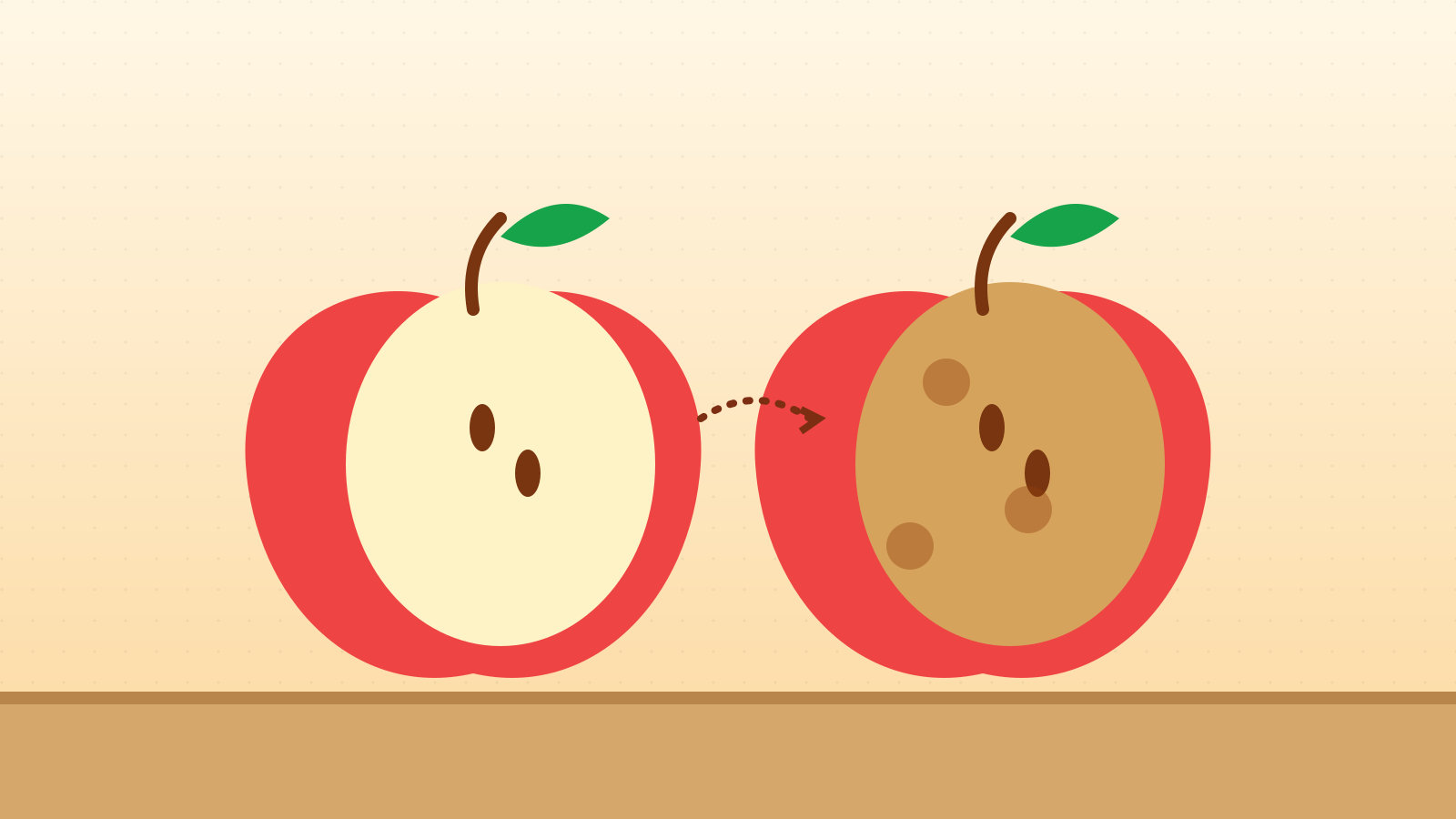
A cut apple turns brown because of enzymatic browning. Inside intact apple cells, an enzyme called polyphenol oxidase and natural compounds called phenols are kept in separate compartments. Cutting or bruising breaks the cells, the two mix and, with oxygen from the air, the enzyme converts the phenols into quinones. These link together into brown pigments similar to melanin. Lemon juice, cold temperatures and keeping air away slow the reaction. Browned apple is safe to eat; it only looks and tastes a little different.
In this article (7)
Slice an apple, leave it on the chopping board and within ten minutes the white flesh starts to turn tan and then brown. Bananas, avocados, potatoes and pears do the same. It looks like the fruit is going off, but what you are watching is a defensive chemical reaction that the fruit carries with it, ready to fire the moment it is damaged.
The ingredients are already inside
An apple cell keeps two key ingredients apart, like the two tubes of a glue that only works when mixed:
- phenols (polyphenols), natural compounds that also give apples part of their flavour and health benefits;
- an enzyme called polyphenol oxidase, or PPO.
In an intact cell the phenols sit mostly in the cell’s storage sac, the vacuole, while the enzyme is stored in other structures called plastids. As long as the cell is whole, they rarely meet.
Cutting starts the reaction
When you cut, bite or bruise an apple, the cell walls and membranes break and the contents mix. Oxygen from the air rushes in. Now the enzyme can do its job.
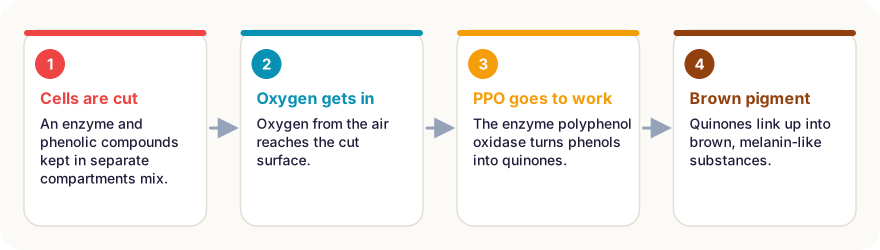
PPO uses oxygen to convert phenols into reactive molecules called quinones. Quinones are unstable. They react with each other and with proteins and amino acids in the apple, linking up into large, complex molecules that absorb light and look brown. These pigments are related to melanin, the pigment in our skin and hair.
Because this reaction is driven by an enzyme, scientists call it enzymatic browning. It is different from the browning of toast or roasted coffee, which comes from the Maillard reaction between sugars and amino acids at high temperatures.
Why would an apple do this?
Browning seems to be part of the plant’s defence system. When an insect bites or a fungus attacks, the quinones formed at the wound are toxic or unpleasant to many pests and microbes, and the brown layer helps to seal the damage, a little like a scab. For a fruit on a tree, that is useful. For a fruit salad, less so.
How to stop apples going brown
To slow browning, you need to block the enzyme, remove oxygen or both.
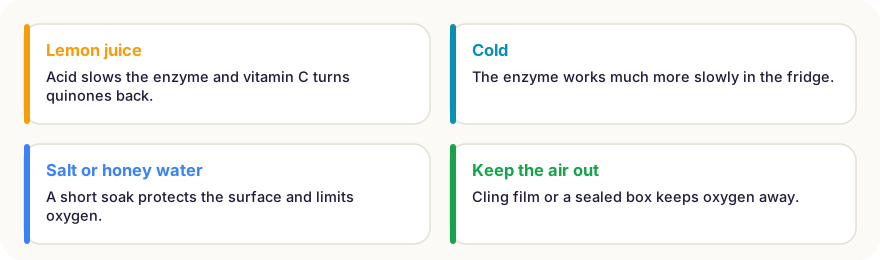
- Lemon juice. PPO works best at a mildly acidic to neutral pH. Lemon juice makes the surface more acidic, which slows the enzyme. It also contains vitamin C (ascorbic acid), an antioxidant that turns quinones back into colourless phenols before they can form pigments. Pineapple or orange juice work in a similar way.
- Cold. Like most enzymes, PPO slows down at low temperatures. Cut apples last longer in the fridge.
- Water dips. Submerging slices in cold water, lightly salted water or honey water limits oxygen at the surface. Honey contains natural compounds that inhibit the enzyme.
- Keeping air out. Wrapping cut fruit tightly or storing it in a sealed box reduces oxygen.
- Heat. Briefly blanching apples in boiling water destroys the enzyme, which is why apple purée and baked apples do not keep browning in the same way.
Non-browning apples
Scientists have also tackled browning at its source. Using a technique called gene silencing, a Canadian company developed apples in which the genes for PPO are largely switched off. Their flesh stays white for much longer after slicing. They were approved for sale in the United States in 2015. Similar approaches have been used in potatoes to reduce bruising and browning.
Is brown apple bad for you?
No. Browning changes the colour, flavour and texture slightly, and some vitamin C and other antioxidants are used up in the process, but the brown pigments are not harmful. Signs of real spoilage are different: mould, an alcoholic or vinegary smell, or a slimy surface.
In short
- Apples brown because the enzyme polyphenol oxidase (PPO) reacts with phenols and oxygen when cells are damaged.
- The reaction produces quinones, which link into brown, melanin-like pigments.
- It is likely a defence against insects and microbes.
- Lemon juice slows browning by making the surface acidic and supplying vitamin C.
- Cold, water dips and keeping air out also help; heat destroys the enzyme.
- Brown apple is safe to eat.
Frequently asked questions
Is a brown apple safe to eat?
Yes. Browning is a natural chemical reaction, not spoilage. A brown apple may taste slightly less fresh and lose some vitamin C, but it is not harmful. Mould, a fermented smell or a slimy texture are different signs that fruit is spoiled.
Why do some apple varieties brown faster than others?
Varieties differ in how much polyphenol oxidase and how many phenols they contain, and in their natural acidity. Some, such as many Granny Smith and Pink Lady apples, brown more slowly than others.
Does salt water really work?
Yes, a short dip in lightly salted water slows browning, partly by limiting the enzyme and oxygen at the surface. Rinse the slices afterwards if you do not want them to taste salty.
What is a non-browning apple?
Some apple varieties have been developed with the genes for polyphenol oxidase switched off, so their flesh stays white for much longer after cutting. They were approved for sale in the United States in 2015.
Sources
- Moon, K. M. et al. (2020). Recent trends in controlling the enzymatic browning of fruit and vegetable products. Molecules
- Library of Congress – Everyday Mysteries: Why do apples turn brown?
This article is based on peer-reviewed research and publications from trusted institutions, and it is reviewed regularly. How we work →
You might also wonder
All in Everyday Science →
How Does Soap Work? The Two-Faced Molecule That Cleans
Water alone can’t wash away grease, but soap can. How soap molecules trap oil in micelles, why they destroy some viruses and why 20 seconds matter.
Why Does Bread Go Stale? It Isn’t Just Drying Out
Stale bread isn’t simply dry: its starch slowly recrystallises. Why bread stales faster in the fridge, why toasting revives it and the best way to store it.
Why Is Glass Transparent When Sand Is Not? The Physics of Clear Glass
Glass is made from sand, yet light passes straight through it. Why glass is clear, why it blocks some ultraviolet, and whether old windows really flow.
Why Does Ice Float? Water’s Life-Saving Weirdness
Solids are usually denser than their liquids, so why does ice float? How hydrogen bonds make water an exception and keep lakes alive in winter.
Why Do Onions Make You Cry? The Chemistry of Tears and How to Stop Them
Why do your eyes water when you cut onions? The tear gas onions make to protect themselves — and the science-backed ways to chop onions without crying.
Why Does Salt Melt Ice? The Chemistry of Gritting Roads in Winter
Why do we salt roads in winter, how does salt melt ice and why doesn’t it work when it is very cold? Freezing-point depression and its side effects, explained.