Why Do Onions Make You Cry? The Chemistry of Tears and How to Stop Them
Why do your eyes water when you cut onions? The tear gas onions make to protect themselves — and the science-backed ways to chop onions without crying.
Short answer
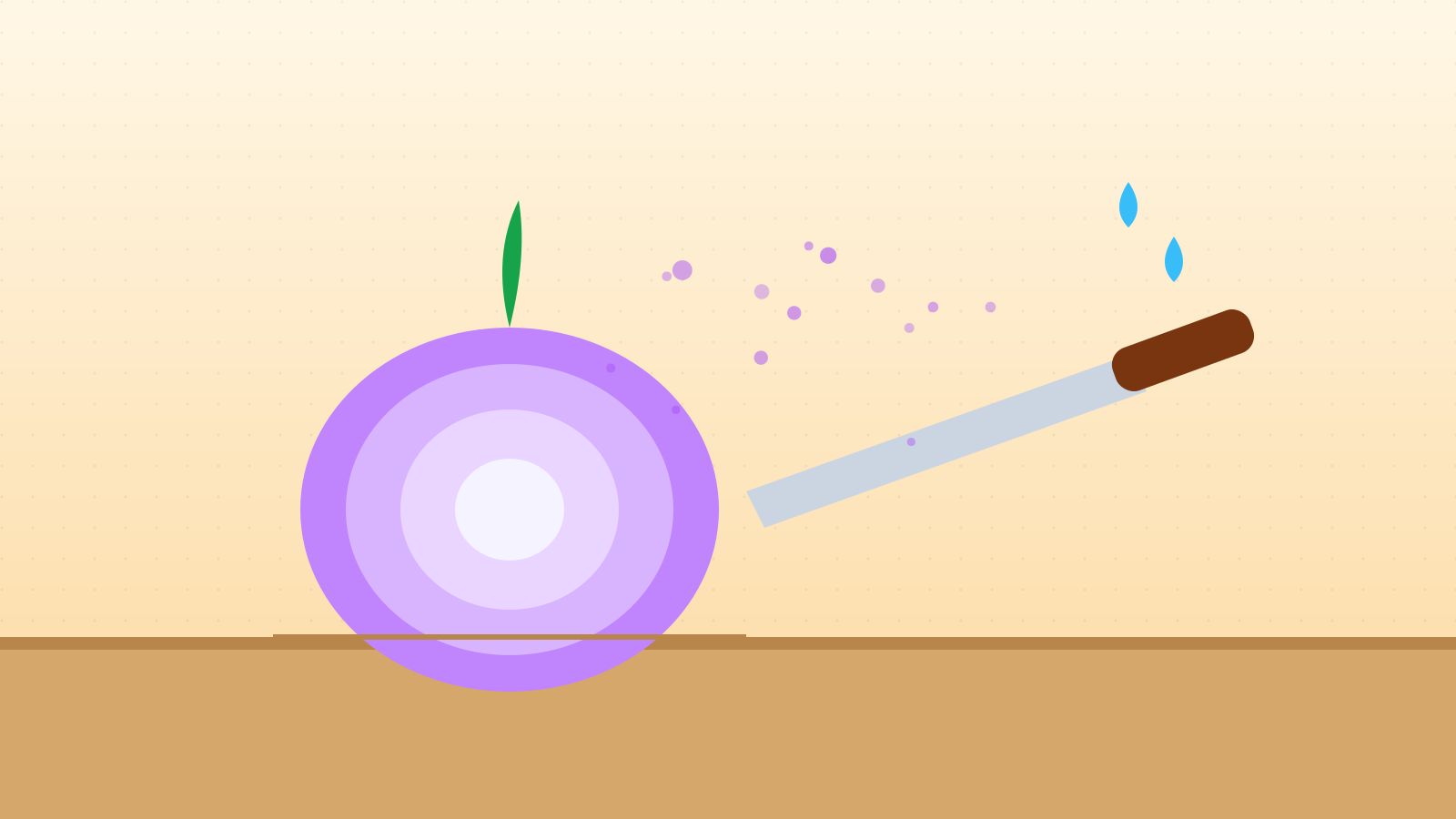
Cutting an onion breaks its cells, letting sulphur compounds react with a series of enzymes. The end product is a volatile gas called syn-propanethial-S-oxide that drifts into the air. It stimulates nerve endings in your eyes, and your brain responds by producing tears to protect them.
In this article (7)
It is one of the most common little dramas in the kitchen: the knife goes into an onion and within seconds your eyes start stinging, then streaming. This is no accident. The onion is activating a chemical defence system it evolved to protect itself.
Why do onions have a weapon like this?
Onions grow underground, where they are vulnerable to animals, insects and microbes that want to eat them. For a plant that cannot run away, the best defence is a chemical one: when something bites into an onion, the irritating compounds released deter it. When we cut an onion with a knife, the same alarm goes off.
The chemistry of tears, step by step
An intact onion contains no tear gas. The raw materials and the enzymes that turn them into gas are ready and waiting — just kept in separate compartments. When you cut it:
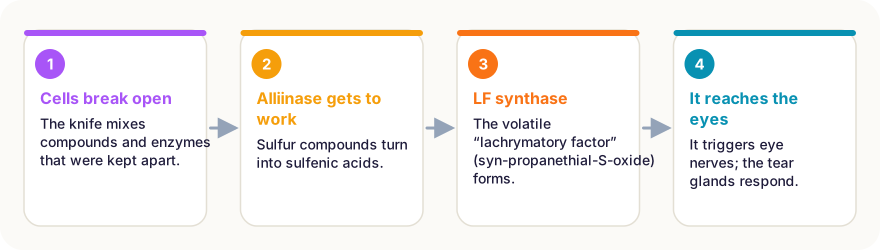
- Cells are torn open. The knife ruptures cell walls and the separated ingredients mix.
- The enzyme alliinase gets to work. It breaks down the onion’s sulphur-containing amino acid derivatives (sulphoxides) into unstable compounds called sulphenic acids.
- The tear enzyme does its job. An enzyme discovered by Japanese researchers in 2002, lachrymatory factor synthase (LFS), rapidly converts that acid into syn-propanethial-S-oxide.
- The gas escapes into the air. This compound is highly volatile and rises from the chopping board to your eyes within seconds.
Before this discovery, scientists thought the tear gas formed spontaneously as a by-product of alliinase. The study by Imai and colleagues, published in Nature, showed that it actually depends on a separate enzyme.
Why do your eyes water?
When the gas reaches the moist film covering the front of your eye, it stimulates sensory nerves in the surface of the eye. These nerves carry receptors called TRPA1, “chemical danger” sensors that also react to the pungent compounds in mustard and wasabi.
Your nervous system reads the signal as a threat and triggers a protective reflex: the tear glands release a flood of tears to dilute and wash the irritant away. Tears, in other words, are the eye cleaning itself.
Science-backed ways to chop onions without crying
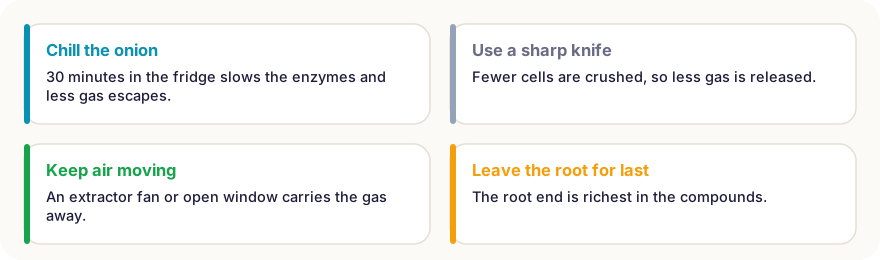
Knowing how the gas forms also explains how to fight it:
| Method | Why it works | Effect |
|---|---|---|
| Chill the onion first | Enzymes slow down in the cold and less gas evaporates | Strong |
| Use a very sharp knife | Fewer cells are crushed, so less enzyme mixes | Strong |
| Leave the root end until last | Sulphur compounds are more concentrated there | Moderate |
| Ventilation, extractor hood or fan | Gas is carried away before it reaches your eyes | Moderate |
| Goggles | Physically block the gas from your eyes | Very strong |
| Bread, gum or a spoon in your mouth | Little scientific support | Low |
Cutting an onion under water also reduces the gas in the air but is impractical. Briefly microwaving it can deactivate the enzymes, although this also changes the onion’s texture and flavour.
Why do onions turn sweet when cooked?
Raw onion’s sharpness and tear-jerking power come from the sulphur compounds formed at the moment of cutting. Heat both destroys the enzymes and drives off most of those compounds, leaving the onion’s natural sugars. Slowly cooked onions develop a sweet, deep flavour as those sugars caramelise and undergo Maillard reactions.
Is a tearless onion possible?
Yes. In Japan, onions with very low LFS activity were developed through conventional breeding. Elsewhere, “tearless” varieties that produce fewer sulphur compounds over time have also reached supermarkets. These onions tend to taste sweeter and milder, though some cooks say they miss the punch of a classic onion.
In short
You cry when cutting onions because of a clever chemical trap the onion uses to defend itself. Enzymes that mix at the moment of cutting produce a volatile gas, the gas triggers danger sensors in your eyes, and your eyes rinse themselves with tears. A cold onion, a sharp knife and good ventilation will disarm most of that trap.
Frequently asked questions
Does chilling an onion help?
Yes. Cold slows chemical reactions and makes the gas less volatile. Putting an onion in the fridge for 20–30 minutes before cutting noticeably reduces tears.
Does holding bread or chewing gum in your mouth work?
There is no strong scientific evidence for it. The gas reaches your eyes directly through the air, so something in your mouth makes little difference.
Why doesn’t garlic make you cry?
Garlic lacks the enzyme (LFS) that produces the tear gas. The same initial reactions instead produce allicin, which gives garlic its pungent smell.
Is onion gas harmful to the eyes?
No. The stinging is unpleasant but temporary. Tears dilute and wash the gas away, and the discomfort passes quickly.
Sources
This article is based on peer-reviewed research and publications from trusted institutions, and it is reviewed regularly. How we work →
You might also wonder
All in Everyday Science →
How Does Soap Work? The Two-Faced Molecule That Cleans
Water alone can’t wash away grease, but soap can. How soap molecules trap oil in micelles, why they destroy some viruses and why 20 seconds matter.
Why Do Apples Turn Brown? Enzymatic Browning and How to Stop It
A cut apple turns brown within minutes because an enzyme reacts with oxygen. What happens, why lemon juice helps, and whether brown apple is safe to eat.

Why Does Bread Go Stale? It Isn’t Just Drying Out
Stale bread isn’t simply dry: its starch slowly recrystallises. Why bread stales faster in the fridge, why toasting revives it and the best way to store it.
Why Is Glass Transparent When Sand Is Not? The Physics of Clear Glass
Glass is made from sand, yet light passes straight through it. Why glass is clear, why it blocks some ultraviolet, and whether old windows really flow.
Does Hot Water Freeze Faster Than Cold? The Mpemba Effect Explained
A Tanzanian schoolboy claimed hot water freezes faster than cold. Is the Mpemba effect real? The proposed explanations and what careful experiments found.
Why Do Mentos and Coke Explode? The Science of the Soda Fountain
Drop Mentos into cola and foam shoots metres high. It is physics, not a chemical reaction: rough candy surfaces let dissolved carbon dioxide escape all at once.