Can Plants Make Sounds? Stressed Tomatoes Click in Ultrasound
Thirsty or cut plants emit ultrasonic clicks that microphones can record. What a 2023 study found, how plants signal danger and why they still don’t “scream”.
Short answer
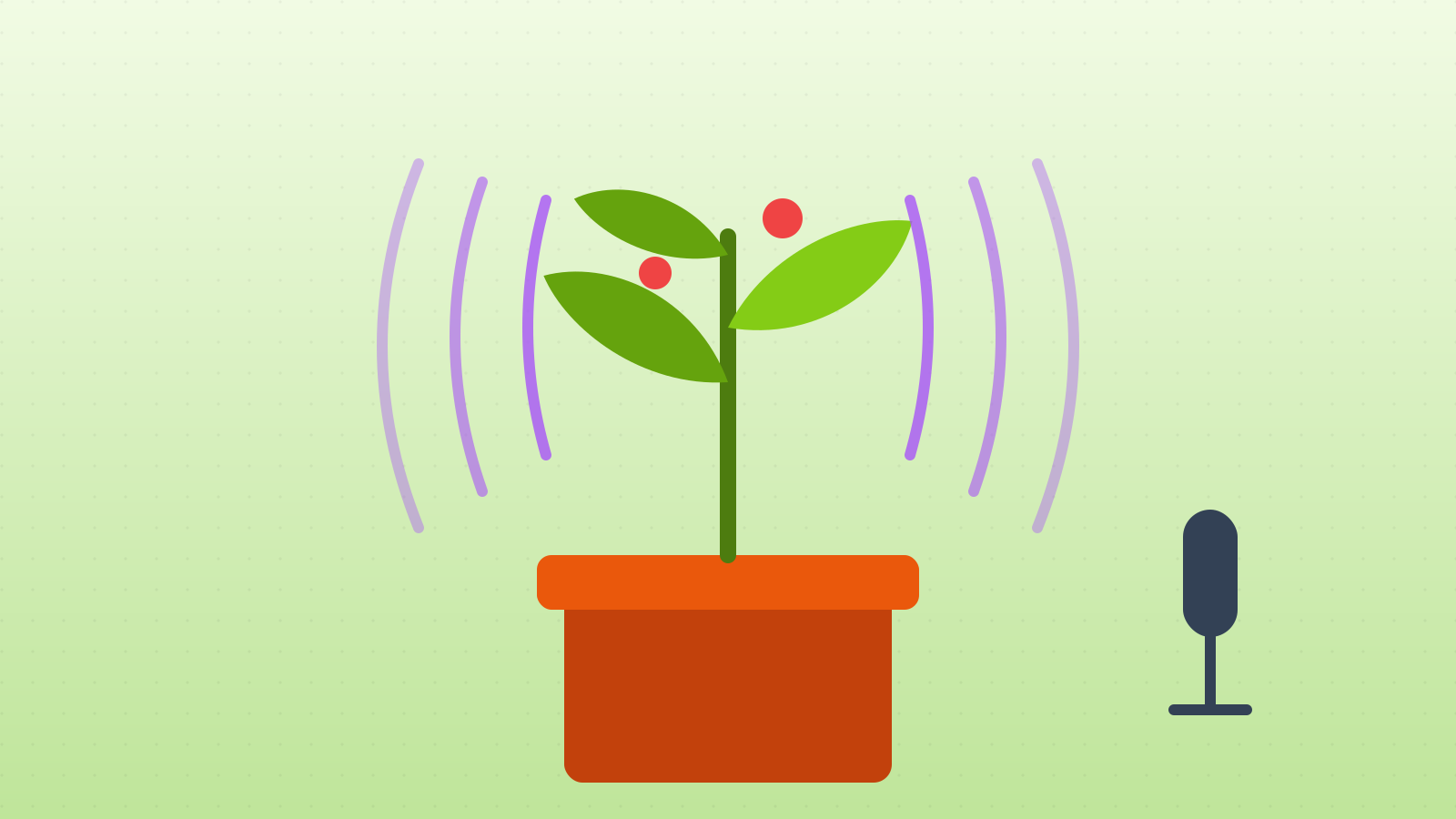
Yes. A 2023 study by researchers at Tel Aviv University recorded tomato and tobacco plants making short clicking sounds in the ultrasonic range, too high for human ears. Healthy plants were almost silent, making less than one sound per hour, but drought-stressed tomatoes produced around 35 clicks per hour and cut plants around 15 to 25. A computer could tell from the sounds whether a plant was thirsty or cut. The clicks are probably caused by air bubbles forming and bursting in the plant’s water pipes. They are not cries of pain, since plants have no nervous system, but other organisms could potentially detect them.
In this article (5)
Walk through a quiet greenhouse and you will hear nothing but perhaps the hum of a fan. Yet with the right microphone, some of the plants around you would be clicking. In 2023, scientists published the first clear recordings of plants making airborne sounds, and showed that the sounds change when a plant is in trouble.
The experiment
A team led by evolutionary biologist Lilach Hadany at Tel Aviv University placed tomato and tobacco plants inside soundproof boxes with ultrasonic microphones about 10 centimetres away. Some plants were well watered, some had not been watered for several days, and some had their stems cut.
The result: stressed plants made short clicks, mostly between 20 and 100 kilohertz. That is ultrasound, above the upper limit of human hearing, but well within the hearing range of many animals, such as bats, mice and some moths.
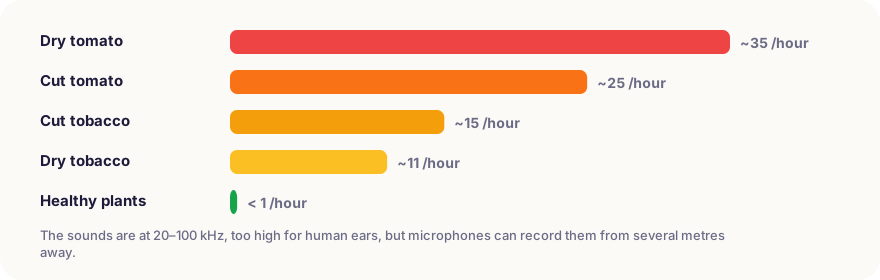
Drought-stressed tomatoes produced around 35 clicks per hour, and cut tomatoes around 25. Tobacco plants clicked less often. Healthy plants made fewer than one sound per hour. The team also recorded plants in a normal greenhouse, not just in boxes, and found the same pattern.
Even more striking, a machine-learning program trained on the recordings could tell, better than chance, whether a sound came from a thirsty plant or a cut one, and from a tomato or a tobacco plant. The sounds, in other words, carry information.
Where the clicks come from
Plants have no vocal cords. The most likely source of the clicks is cavitation in the xylem, the thin pipes that carry water from the roots to the leaves. When a plant is short of water, the tension in those columns rises, and tiny air bubbles can suddenly form and burst. Each burst makes a click, a bit like cracking your knuckles. Scientists had detected these vibrations inside plants before, but not as sound travelling through the air.
Other ways plants “talk”
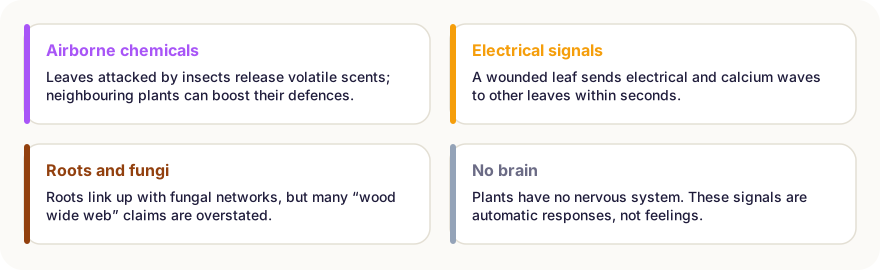
Sound is only one of several ways plants send signals:
- Chemicals in the air. Leaves chewed by insects release volatile compounds. Neighbouring plants can detect these and step up their own defences, and some of the scents attract predators of the pests.
- Electrical signals. In 2013, a study on the small plant Arabidopsis showed that wounding one leaf sends an electrical signal to other leaves within seconds, switching on defence genes. The signal depends on proteins similar to those used by nerve cells in animals.
- Roots and fungi. Plant roots form partnerships with fungi that exchange nutrients. Popular stories describe a “wood wide web” in which trees feed and warn each other, but a 2023 review found that many of these claims go beyond the evidence.
Do plants scream?
Headlines sometimes say that plants “scream” when they are hurt. That goes too far. Plants have no nervous system and no brain, and there is no evidence that they feel pain. The clicks are a physical by-product of water stress, not a deliberate cry.
What the study does suggest is that the clicks could be useful to others. A moth looking for a healthy plant to lay its eggs on might avoid one that clicks, and other plants might even respond. Those ideas still need testing. More practically, microphones could one day help farmers spot thirsty crops before they wilt.
In short
- A 2023 study recorded tomato and tobacco plants making ultrasonic clicks.
- Thirsty tomatoes clicked about 35 times an hour; healthy plants were nearly silent.
- A computer could tell from the sounds what kind of stress a plant was under.
- The clicks probably come from air bubbles bursting in the plant’s water pipes.
- Plants also signal with airborne chemicals and electrical signals.
- Plants don’t feel pain, but their sounds may be informative to other organisms.
Frequently asked questions
Can humans hear plants?
Not directly. The clicks recorded in the 2023 study were mostly between 20 and 100 kilohertz, above the roughly 20 kilohertz limit of human hearing. Special microphones and slowed-down recordings make them audible.
Do plants feel pain?
There is no evidence that plants feel pain. They have no nerves or brain. They do detect damage and respond with chemical and electrical signals, but these are automatic reactions, not experiences.
Does talking to plants help them grow?
There is no strong evidence that talking helps. Some studies suggest plants respond to vibrations, but any effect of speech is likely small compared with light, water, nutrients and temperature.
Could farmers use plant sounds?
The researchers suggest that microphones in greenhouses or fields might one day detect which plants need water before they wilt, helping farmers irrigate more precisely.
Sources
- Khait, I. et al. (2023). Sounds emitted by plants under stress are airborne and informative. Cell
- Mousavi, S. A. R. et al. (2013). Glutamate receptor-like genes mediate leaf-to-leaf wound signalling. Nature
- Karst, J. et al. (2023). Positive citation bias and overinterpreted results lead to misinformation on common mycorrhizal networks in forests. Nature Ecology & Evolution
This article is based on peer-reviewed research and publications from trusted institutions, and it is reviewed regularly. How we work →
You might also wonder
All in Plants →
Do Sunflowers Follow the Sun? Yes, But Only When They Are Young
Young sunflowers turn east to west each day and swing back at night. Mature ones stop and face east. How the plant’s inner clock and bees explain it.
How Do Plants Drink Water? How Trees Lift Water 100 Metres Without a Pump
Plants have no heart, yet the tallest trees lift water over 100 metres. How roots, xylem and evaporation from leaves pull water up from the soil.
Why Are Leaves Green? Chlorophyll, Photosynthesis and a Puzzle
Leaves are green because chlorophyll absorbs red and blue light. But why would plants waste the most abundant colour of sunlight? The surprising answer.
How Does a Venus Flytrap Work? The Plant That Counts to Five
A Venus flytrap snaps shut in a tenth of a second, but only after counting two touches. How its trigger hairs, electrical signals and snap-buckling leaves work.
What Is the Oldest Tree in the World? Meet Methuselah, Nearly 5,000 Years Old
A bristlecone pine in California called Methuselah is about 4,850 years old. How scientists count tree rings, and how a gnarled pine outlives empires.
How Do Bats See in the Dark? Echolocation Explained
Bats are not blind, but many hunt in total darkness by listening to echoes. How echolocation works, how fast bats call, and how moths fight back.