Are Birds Dinosaurs? Why Your Pigeon Is a Living Theropod
Birds did not just evolve from dinosaurs – they are dinosaurs. Feathers, wishbones and nesting fossils show how a T. rex relative became today’s birds.
Short answer
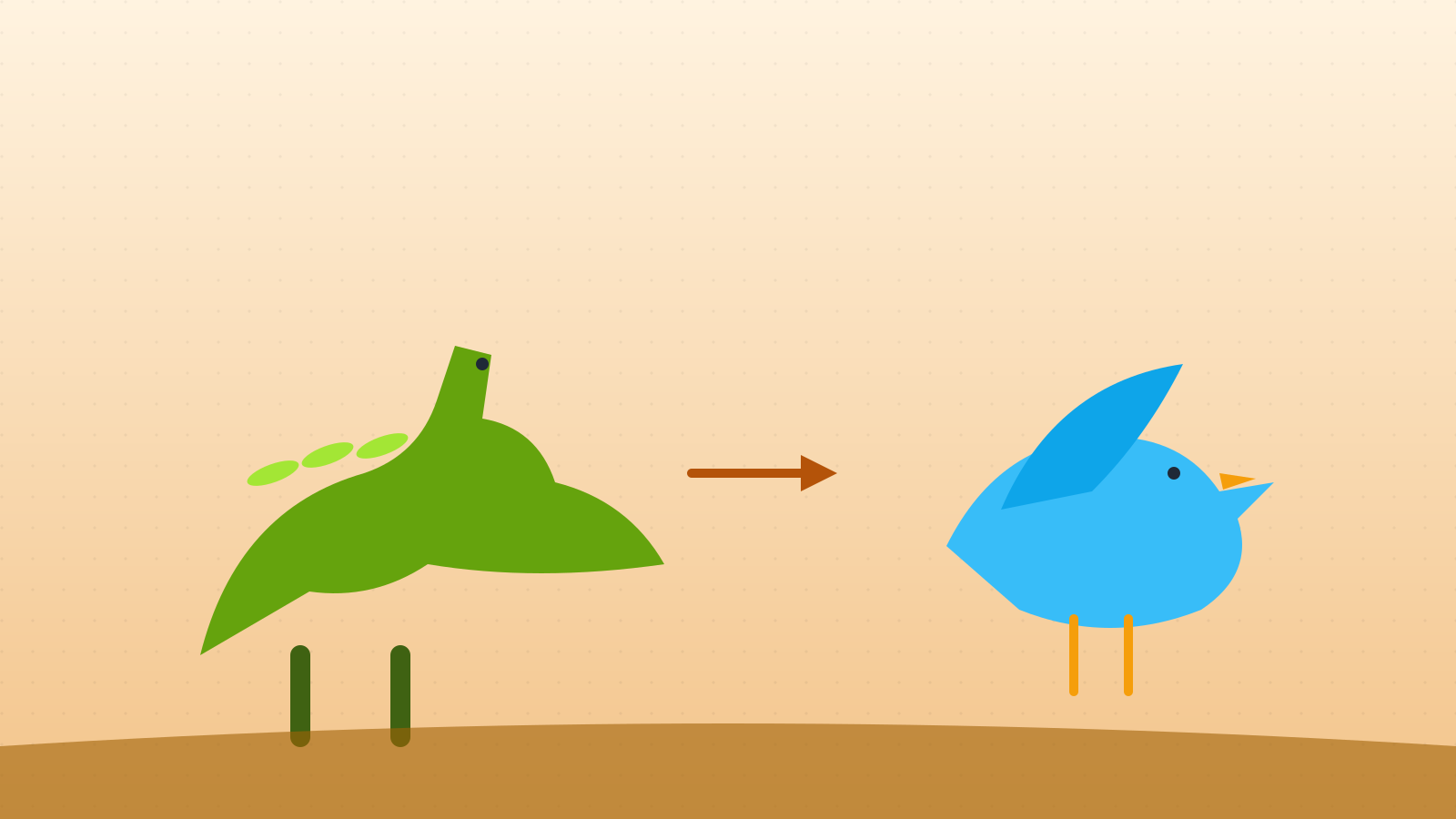
Yes. Scientists classify birds as dinosaurs: they are the one group of dinosaurs that survived the mass extinction 66 million years ago. Birds evolved from small, feathered, meat-eating dinosaurs called theropods, the same group that includes Tyrannosaurus rex and Velociraptor. The evidence includes many feathered dinosaur fossils found in China since the 1990s, shared features such as hollow bones, air sacs and a wishbone, and fossils of dinosaurs brooding their eggs like birds. In the language of evolution, a sparrow is as much a dinosaur as a bat is a mammal.
In this article (6)
Next time you see a pigeon pecking at crumbs, look closely: you are watching a dinosaur. That is not a figure of speech. In modern biology, birds are dinosaurs, the only branch of the dinosaur family that survived the asteroid impact 66 million years ago.
A family tree, not a ladder
Biologists group living things by ancestry. A group should include an ancestor and all of its descendants. Since birds descend from dinosaurs, leaving them out of “Dinosauria” would be like leaving bats out of mammals because they fly.
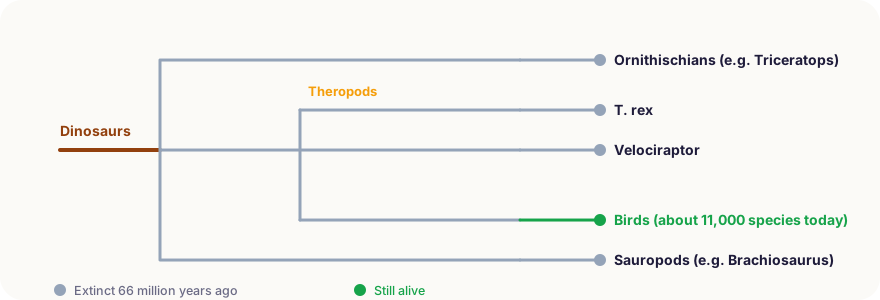
Birds sit within the theropods, the mostly two-legged, meat-eating dinosaurs that include Tyrannosaurus rex and Velociraptor. More precisely, they belong to a group of small, feathered theropods called paravians. That is why scientists sometimes call the other dinosaurs non-avian dinosaurs: dinosaurs that are not birds.
The first clue: Archaeopteryx
The idea is not new. In 1861, just two years after Darwin published On the Origin of Species, quarry workers in Germany found Archaeopteryx, a creature about 150 million years old. It had feathers and wings like a bird, but also teeth, clawed fingers and a long bony tail like a small dinosaur. In the 1860s, the biologist Thomas Henry Huxley pointed out the striking similarities between birds and small dinosaurs.
The idea fell out of favour for decades, and was revived in the 1960s and 70s when the palaeontologist John Ostrom described Deinonychus, an agile, bird-like predator.
The feathered dinosaur revolution
The decisive evidence came from China. In 1996, scientists described Sinosauropteryx, a small theropod covered in simple, hair-like feathers. Since then, fine-grained rocks in Liaoning Province and elsewhere have produced dozens of species of feathered dinosaurs, from fluffy ground-runners to Microraptor, which had long feathers on all four limbs.
Feathers, it turns out, evolved long before flight. They were probably first used for insulation, display and brooding eggs.
What birds share with dinosaurs
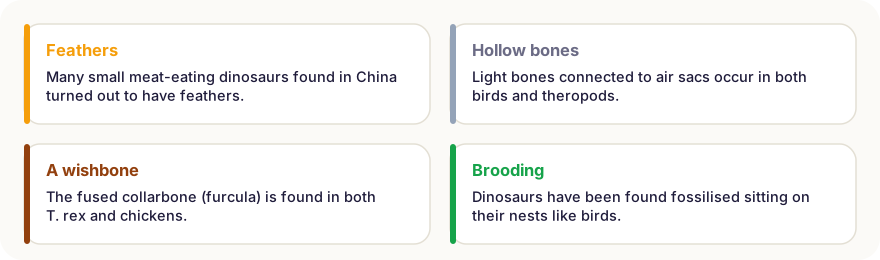
- Feathers: found on many theropods, not just birds.
- Hollow bones and air sacs: light, air-filled bones linked to a system of air sacs that makes breathing very efficient. Both birds and many theropods have them.
- A wishbone: the fused collarbone, or furcula, that you find in a roast chicken also occurs in T. rex and Velociraptor.
- Nesting behaviour: fossils of Citipati, found in Mongolia, show adults sitting on their nests with their arms spread over the eggs, exactly like a brooding bird.
- Similar eggs and growth: some dinosaurs laid eggs with bird-like shells and grew quickly, like birds.
A 2015 review by Stephen Brusatte and colleagues concluded that the features of birds were built up gradually over tens of millions of years in their dinosaur ancestors, rather than appearing suddenly.
How birds survived
When the asteroid struck, all large dinosaurs died. Some small birds survived. Scientists think it helped that they were small, could fly to find food and shelter, and that some had toothless beaks suited to eating seeds, which could last in the soil through the long, dark impact winter.
Today there are about 11,000 species of birds, more than twice as many as there are mammals. In a sense, the age of dinosaurs never ended.
In short
- Birds are dinosaurs: the only dinosaur branch that survived the extinction 66 million years ago.
- They evolved from small, feathered theropods, relatives of T. rex and Velociraptor.
- Archaeopteryx (1861) and many feathered dinosaurs from China support the link.
- Birds and theropods share feathers, hollow bones, air sacs and a wishbone.
- Fossils show dinosaurs brooding their eggs like birds.
- Small size, flight and seed-eating beaks may have helped birds survive.
Frequently asked questions
Which dinosaurs are birds most closely related to?
Birds belong to a group of theropods called paravians, which also includes small, feathered predators such as Velociraptor and Microraptor. These are among the closest known relatives of birds.
Did T. rex have feathers?
Some of its close relatives, such as Yutyrannus, had simple feathers. Skin impressions from adult T. rex show mostly scales, so large adults may have had few feathers, though this is still debated.
What was the first bird?
Archaeopteryx, found in Germany in 1861, is the most famous early bird-like dinosaur, living about 150 million years ago. It had feathers and wings but also teeth, clawed fingers and a long bony tail.
Are crocodiles related to birds?
Yes. Among living animals, crocodiles and alligators are the closest relatives of birds. Both belong to a larger group called archosaurs, which also included the non-bird dinosaurs and pterosaurs.
Sources
- Brusatte, S. L., O’Connor, J. K. & Jarvis, E. D. (2015). The origin and diversification of birds. Current Biology
- Norell, M. A. et al. (1995). A nesting dinosaur. Nature
This article is based on peer-reviewed research and publications from trusted institutions, and it is reviewed regularly. How we work →
You might also wonder
All in Dinosaurs →
How Are Fossils Formed? From Bone to Stone in Millions of Years
Fossils form when remains are buried fast and minerals slowly replace them. Why fossilisation is so rare, the main types of fossil and how they are dated.
What Killed the Dinosaurs? The Asteroid, the Evidence and the Volcanoes
66 million years ago an asteroid hit Mexico and ended the age of dinosaurs. How scientists found the clues: iridium, shocked quartz and a buried crater.
Are Pterosaurs Dinosaurs? The Flying Reptiles That Weren’t
Pterosaurs flew over the dinosaurs’ heads, but they were not dinosaurs. How they flew on one-finger wings, and why some were as tall as giraffes.
How Big and Fast Was T. rex? Size, Bite Force and Top Speed
T. rex was about 12 metres long, weighed 8 tonnes or more and had the strongest bite of any land animal. But could it outrun a car? What the science says.
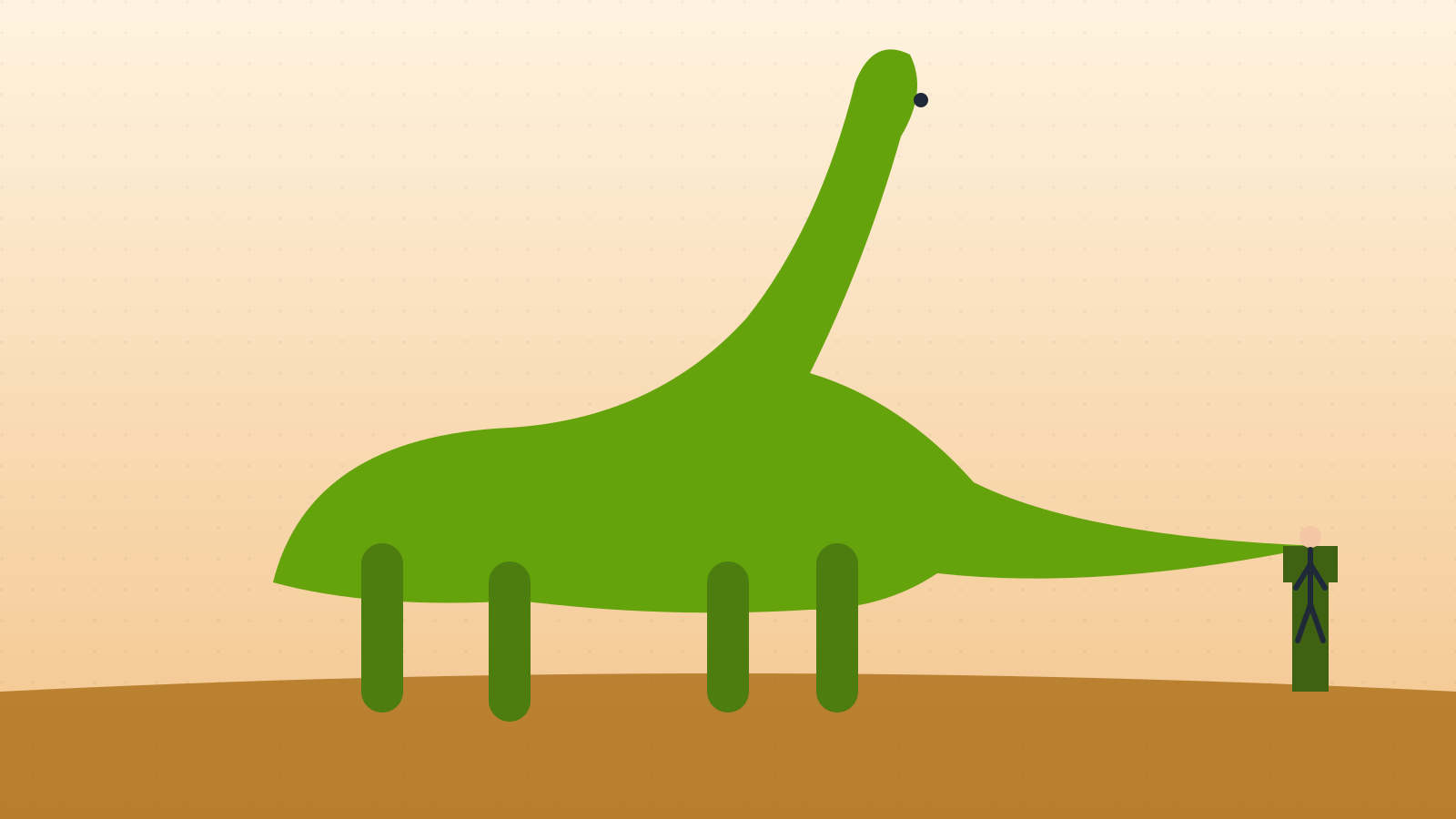
What Was the Biggest Dinosaur? The Titanosaurs That Outweighed Planes
Patagotitan and Argentinosaurus were up to 37 metres long and weighed around 60–70 tonnes. How scientists estimate their size and how sauropods grew so huge.
How Do Bats See in the Dark? Echolocation Explained
Bats are not blind, but many hunt in total darkness by listening to echoes. How echolocation works, how fast bats call, and how moths fight back.