Why Does My Voice Sound Different on Recordings? Blame Your Skull
Your recorded voice sounds higher and thinner because you normally hear yourself partly through bone. Why recordings feel strange and how to adapt.
Short answer
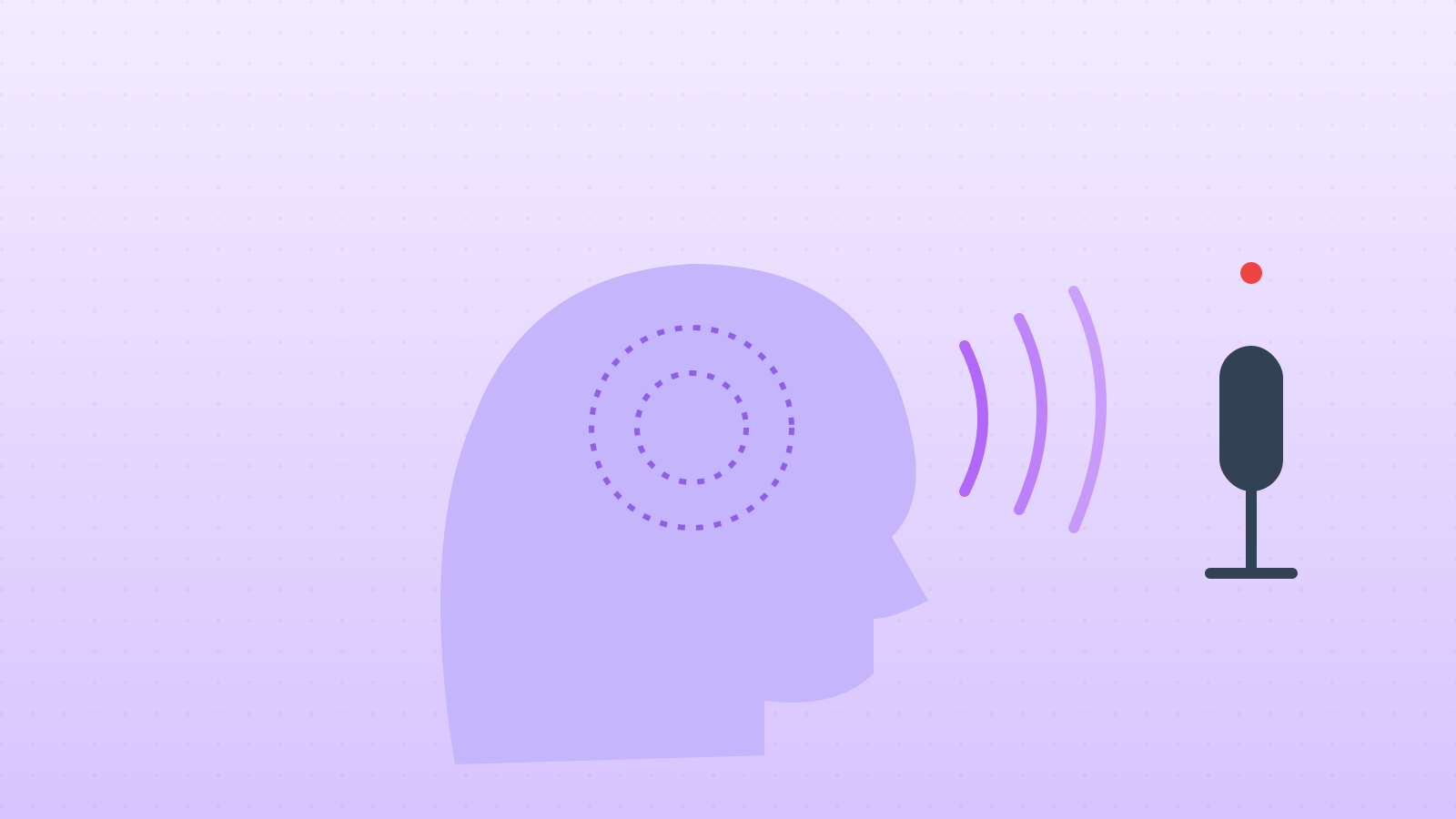
Your voice sounds different on recordings because you normally hear yourself in two ways at once. Sound travels through the air from your mouth to your ears, but your vocal cords also vibrate the bones of your skull, which carry sound directly to your inner ear. This bone conduction especially boosts low frequencies, so the voice you hear in your head sounds deeper and fuller. A microphone only picks up the air-conducted sound, which is what everyone else hears. Because the recording does not match the voice your brain has learned to expect, it often sounds thin, strange and unpleasant to you, though rarely to others.
In this article (5)
You listen back to a voice message or watch a video of yourself and cringe: “Do I really sound like that?” Almost everyone has had this experience. Your recorded voice seems higher, thinner and somehow foreign, as if it belonged to someone else. The reason lies partly in physics and partly in the brain.
Two routes into your ears
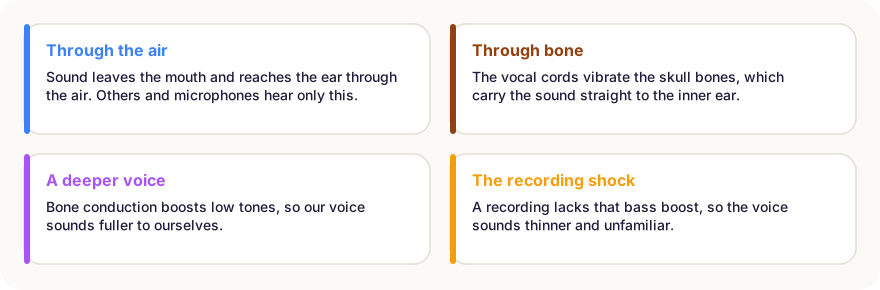
When other people speak, their voices reach your ears only through the air. But when you speak, sound reaches your inner ear by two routes:
- Air conduction: sound waves leave your mouth, travel around your head and enter your ears, just like anyone else’s voice.
- Bone conduction: your vocal cords vibrate not only the air but also the bones and tissues of your head. These vibrations travel directly through your skull to the cochlea in your inner ear.
Bone conduction is especially good at carrying low frequencies. So the voice you hear in your head has extra bass: it sounds deeper, richer and fuller than the voice that reaches other people.
You can test this yourself. Put your fingers in your ears and hum: the sound becomes louder and deeper, because you block the air route and hear more of the bone route.
The recording strips away the bass
A microphone picks up only the sound travelling through the air, exactly what other people hear. When you play it back, you hear your voice without the bone-conducted part for the first time. Compared with the voice you are used to, it sounds higher and thinner.
Cheap phone speakers can make it sound worse, but even a perfect recording will sound unfamiliar for this reason.
Why it feels so uncomfortable
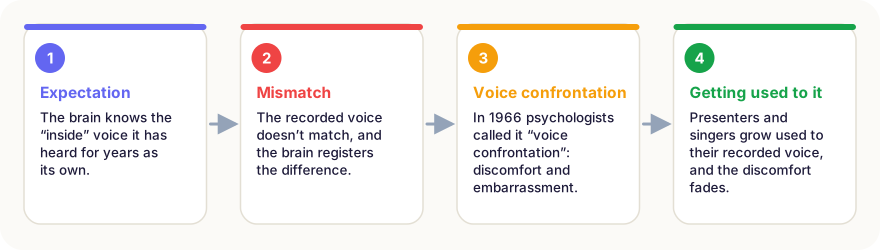
The physics explains why the recording sounds different, but not why many people find it unpleasant. That part is psychological. Your brain has learned over a lifetime what your voice sounds like. When a recording does not match that internal model, it feels wrong.
In 1966, psychologists Philip Holzman and Clyde Rousey studied this reaction and called it voice confrontation. In their experiments, people hearing their own voice often showed discomfort and embarrassment, and noticed things they disliked about how they sounded, such as nervousness or an accent, which other listeners did not focus on.
Other people, meanwhile, notice nothing strange: the recording sounds exactly like the voice they always hear.
Getting used to it
The good news is that the reaction fades with practice. Radio presenters, podcasters, actors and singers listen to recordings of themselves all the time and usually stop finding them strange. Over time, the brain updates its expectations.
In short
- You hear your own voice through both air and bone conduction.
- Bone conduction boosts low frequencies, so your voice sounds deeper to you.
- A microphone records only the air-conducted sound, which is what others hear.
- Recordings therefore sound higher and thinner to you, but not to others.
- The discomfort, called voice confrontation, comes from a mismatch with your expectations.
- Listening to yourself regularly makes the strangeness fade.
Frequently asked questions
Is my recorded voice what other people hear?
Mostly, yes. Other people hear your voice through the air, as a microphone does. A good-quality recording played at a sensible volume is close to how you sound to others.
Why do I sound higher on recordings?
Bone conduction adds extra low-frequency sound to the voice you hear inside your head. Without it, the recording sounds higher and thinner by comparison.
Why don’t other people notice anything strange about my recorded voice?
They have only ever heard your voice through the air, so the recording matches what they expect. Only you have the bone-conducted version to compare it with.
How can I get used to my recorded voice?
Listen to recordings of yourself regularly. Presenters, podcasters and singers usually find the discomfort fades with repeated exposure.
Sources
- Holzman, P. S. & Rousey, C. (1966). The voice as a percept. Journal of Personality and Social Psychology
- Holzman, P. S. et al. (1966). On listening to one’s own voice: effects on psychophysiological responses and free associations. Journal of Personality and Social Psychology
This article is based on peer-reviewed research and publications from trusted institutions, and it is reviewed regularly. How we work →
You might also wonder
All in Brain & Mind →
Why Do We Laugh? The Surprising Science of Laughter
Most laughter has nothing to do with jokes. Why we laugh far more with others, why laughter is contagious, how it relieves pain, and why apes laugh too.

Why Do We Procrastinate? It’s About Feelings, Not Laziness
Procrastination isn’t a time-management problem: it’s a way of escaping bad feelings. What science says about why we delay and the tricks that help.

Why Does Time Fly When You’re Having Fun? The Psychology of Time
An hour with friends vanishes while a boring meeting drags on. Why our sense of time stretches and shrinks, and why holidays seem long afterwards.

Can You Remember Things That Never Happened? How False Memories Form
Memory is not a video recording. Classic experiments show how a single word can change what people remember, and how vivid false memories can be created.

Why Do We Cry? The Science of Emotional Tears
Humans are the only animals known to cry emotional tears. The three kinds of tears, why we cry when sad or happy, and whether crying really helps.
What Is Déjà Vu? The Science Behind “I’ve Been Here Before”
Why does déjà vu happen? The brain processes and memory theories behind the feeling of having lived a moment before — and when déjà vu can be a warning sign.