Why Do We Sweat? How Your Body’s Built-In Air Conditioning Works
Sweating cools you down as it evaporates from your skin. How sweat glands work, why sweat smells, why humidity feels worse and how much water you can lose.
Short answer
We sweat to cool down. When your body temperature rises, from exercise, hot weather or fever, your brain signals millions of sweat glands in the skin to release a salty fluid. As that sweat evaporates, it takes heat away from the skin, cooling the blood flowing underneath. Humans have about 2 to 4 million eccrine sweat glands, more than almost any other animal, which lets us stay cool during long exertion. Sweat itself is nearly odourless; body odour comes from bacteria breaking down the oilier sweat produced by apocrine glands in the armpits and groin.
In this article (7)
On a summer day or halfway through a run, beads of sweat appear on your forehead, your shirt gets damp and you might wish you could switch it off. But sweating is one of the body’s most important survival tools. Without it, you would overheat dangerously in minutes of hard work.
A built-in cooling system
Your body works best at around 37 °C. Every movement produces heat, and on hot days heat also flows in from the surroundings. To get rid of it, the body has two main tricks: widening blood vessels in the skin to release heat, and sweating.
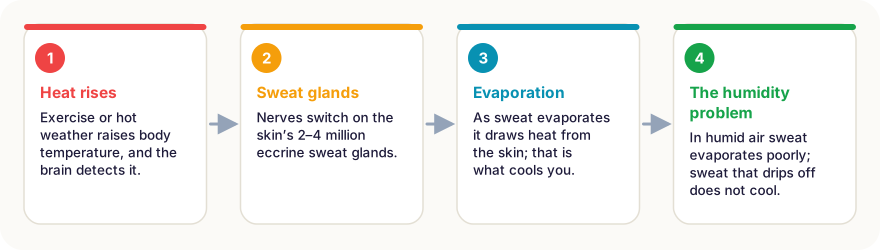
A region of the brain called the hypothalamus acts as a thermostat. When it senses rising temperature, it sends signals through the nerves to the sweat glands. They release a watery, slightly salty fluid onto the skin. When this fluid evaporates, it absorbs a lot of heat from the skin, cooling the blood just beneath it. This is the same physics that makes you feel cold when you step out of a swimming pool.
Two kinds of sweat glands
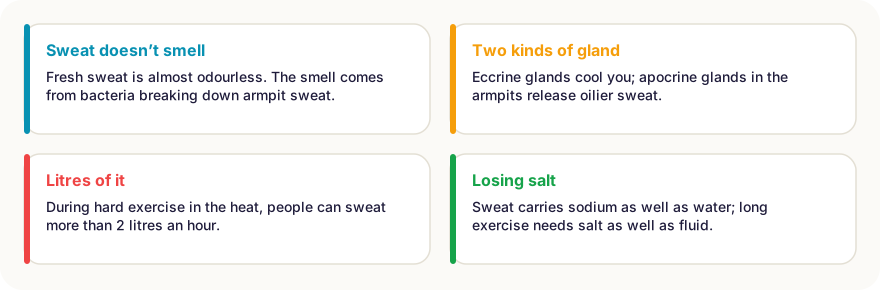
- Eccrine glands cover almost the whole body, with the highest numbers on the palms, soles and forehead. Humans have about 2 to 4 million of them. They produce the watery sweat that cools us.
- Apocrine glands are found mainly in the armpits and groin. They become active at puberty and release a thicker, oilier sweat, especially when we are stressed.
Why sweat smells
Fresh sweat is almost odourless. The smell comes from bacteria living on the skin, which break down substances in apocrine sweat into smelly compounds. That is why armpits smell more than, say, your forearm, and why washing and deodorant help. Antiperspirants go a step further and temporarily plug the sweat ducts.
How much can we sweat?
Sweat rates vary hugely. A person resting in mild weather loses only a little, but during hard exercise in the heat, people can sweat more than 2 litres an hour. Sweat also carries sodium and small amounts of other minerals. During long events, such as marathons, losing a lot of fluid and salt without replacing it can lead to dehydration, while drinking far too much plain water can also be dangerous.
Humans have an unusually powerful sweating system. Many scientists think it helped our ancestors hunt and travel over long distances under the hot African sun, outlasting animals that had to stop and pant.
Why humidity is so uncomfortable
Sweat only cools when it evaporates. In dry air, it evaporates quickly, so you may barely notice you are sweating. In humid air, the air is already full of water vapour, so sweat evaporates slowly and drips off instead. You keep sweating but cool down less, which is why a humid 30 °C can feel worse than a dry 35 °C and why heat waves with high humidity are more dangerous.
Nervous sweating
Sweaty palms before an exam or a job interview are a different kind of sweating. Emotional stress activates the body’s “fight or flight” system, which triggers sweat on the palms, soles and armpits. Scientists think sweaty palms and feet may once have helped our ancestors grip better when running or climbing.
In short
- We sweat mainly to cool down; the brain’s hypothalamus acts as the thermostat.
- Sweat cools only when it evaporates, carrying heat away from the skin.
- Humans have about 2–4 million eccrine sweat glands.
- Sweat itself is nearly odourless; bacteria cause body odour.
- In the heat, people can lose more than 2 litres of sweat an hour, along with salt.
- Humid air slows evaporation, so sweating cools us less.
Frequently asked questions
Why do I sweat more than other people?
Sweat rates vary with genes, fitness, body size, heat acclimatisation and sex. Fit, heat-adapted people often start sweating earlier and sweat more, which helps them stay cool. Very heavy sweating without a reason may be hyperhidrosis, which doctors can treat.
Why does humid weather feel hotter?
In humid air, sweat evaporates slowly because the air is already full of water vapour. Sweat then drips off instead of evaporating, removing little heat, so you feel hotter and stickier.
Does sweating burn calories?
Not directly. Sweating is a sign your body is getting rid of heat. Weight lost through sweating is water, which comes back when you drink.
Why do we sweat when we are nervous?
Stress activates the same nerve system that triggers sweating, especially on the palms, soles and armpits. This emotional sweating is not mainly about cooling.
Sources
- Baker, L. B. (2019). Physiology of sweat gland function: the roles of sweating and sweat composition in human health. Temperature
- MedlinePlus – Sweating
This article is based on peer-reviewed research and publications from trusted institutions, and it is reviewed regularly. How we work →
You might also wonder
All in Human Body →
Why Do We Blush? The Science of a Very Human Reaction
Blushing is the only facial expression we cannot fake or hide. What happens in the body when we turn red, why does it start, and is it actually useful?
How Does Caffeine Keep You Awake? Adenosine, Half-Life and Sleep
Caffeine doesn’t give you energy; it blocks a sleepiness signal in the brain. How it works, how long it lasts, how much is safe and why it can ruin your sleep.
Why Do Your Ears Pop on a Plane? Cabin Pressure and the Eustachian Tube
Ears block and pop on planes because cabin pressure changes faster than your middle ear can adjust. Why descent is worse, and the tricks that actually help.
What Causes Muscle Cramps? Why Muscles Suddenly Lock Up
A muscle cramp is a sudden, painful contraction you can’t control. What science says about the causes, why stretching helps and how to prevent night cramps.
What Determines Eye Colour? Why Blue Eyes Have No Blue Pigment
Eye colour depends on the amount of melanin in the iris, not on blue or green pigments. The genes involved, why babies’ eyes change, and blue eyes’ origin.
Why Do Fingers Wrinkle in Water? Your Nervous System’s Surprising Trick
Why do fingertips prune after a long bath? It is not just skin soaking up water — it is your nervous system at work. Plus the debate over what wrinkles are for.