Why Do We Dream? What Science Knows About Dreams
What are dreams for, and why do we forget most of them? What the brain does during sleep and the strongest scientific theories about the purpose of dreaming.

Short answer
Nobody knows the purpose of dreams for certain. Leading theories suggest dreams help the brain sort and store the day’s experiences, process emotions and rehearse responses to possible threats. The most vivid dreams happen during REM sleep, but dreaming also occurs in other sleep stages.
In this article (6)
Every night when we close our eyes, the brain takes us on journeys that can be bizarre, frightening or startlingly realistic. Humans have tried to interpret dreams for thousands of years. Modern science asks a different question: why does the brain produce them at all?
What is the brain doing during sleep?
Sleep is not one uniform state of rest. Through the night the brain cycles through different stages in loops of roughly 90 minutes:
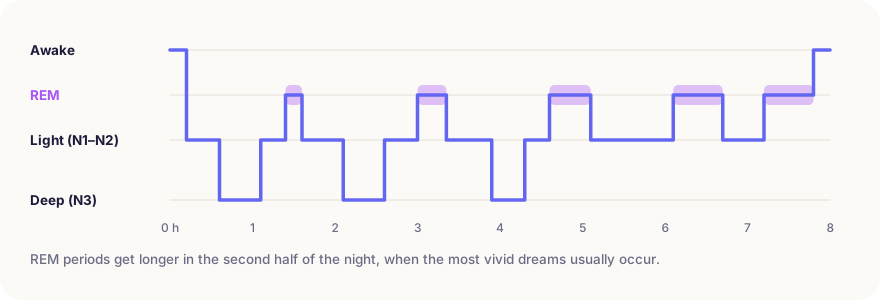
- Light sleep (N1, N2): heart rate slows and the body relaxes.
- Deep sleep (N3): brain waves slow right down. Physical repair and the strengthening of some kinds of memory are concentrated here.
- REM sleep: the eyes dart around beneath the lids and the brain becomes almost as active as when awake — yet most muscles are temporarily paralysed.
The most vivid, story-like and emotional dreams usually happen in REM sleep. The muscle paralysis exists to stop us acting out those dreams with our bodies.
Do we only dream in REM sleep?
That was the assumption for a long time, but we now know it is not true. In a 2017 study at the University of Wisconsin, volunteers were monitored with high-density EEG and woken repeatedly through the night to report whether they had been dreaming.
The results were striking: people also dreamed outside REM sleep. The researchers found that activity in a region towards the back of the brain — dubbed the “posterior hot zone” — largely predicted whether someone was dreaming. Dreaming, it seems, depends less on a particular sleep stage than on specific brain regions being active.
What are dreams for? The main theories
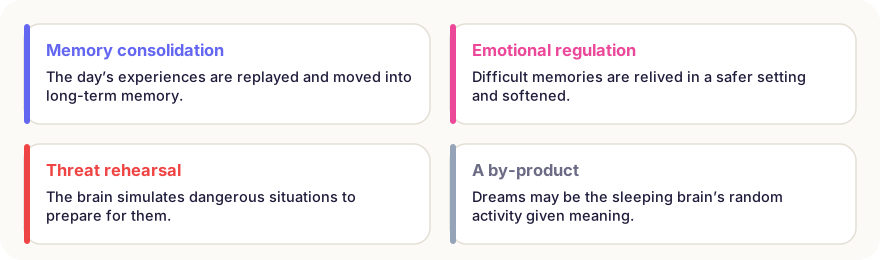
Scientists do not agree on a single purpose, but there are several strong theories that are not mutually exclusive:
1. Organising memory
During sleep the brain replays what it learned during the day and transfers it into long-term memory. In animal experiments, the brain cells that fired while rats ran a maze during the day fired again in the same order while they slept. Dreams may be the fragments of this replay and sorting process that reach consciousness — which is why pieces of the day so often turn up in them.
2. Processing emotions
During REM sleep, levels of the stress chemical noradrenaline fall sharply. Some researchers believe this lets the brain reprocess difficult emotional experiences in a “safer” setting, which may explain why a painful event can sting less the next morning. On this view, dreaming works like a kind of overnight therapy.
3. Rehearsing for danger
According to Finnish psychologist Antti Revonsuo’s threat simulation theory, dreams are an evolutionary rehearsal space that helped our ancestors prepare for dangerous situations. The fact that themes such as being chased, falling or sitting an exam unprepared are so common is one observation that supports it.
4. The brain making sense of its own noise
The activation-synthesis model from the 1970s proposed that during sleep the brainstem sends random signals and the higher brain tries to weave them into a story. It helps explain why dreams are often so strange and illogical, and today it is usually considered alongside the other theories.
Why do we forget our dreams?
Most dreams vanish from memory within minutes of waking, for several reasons:
- During sleep, levels of chemicals that help record new memories, such as noradrenaline, are low.
- The hippocampus, one of the brain’s memory-recording hubs, is not fully in communication with conscious awareness during some sleep stages.
- As soon as we wake, our attention switches to daily life and the fragile dream memory is lost.
If you want to remember dreams, the most effective method is simple: keep a notebook by the bed and write down whatever you recall the moment you wake, before you move.
Lucid dreams: knowing you are dreaming
Some people become aware that they are dreaming while still in the dream, and can even steer what happens. This is called lucid dreaming. In laboratory studies, lucid dreamers have used pre-agreed eye movements to “signal” researchers from inside their sleep — now an important tool in dream research.
In short
Dreams are the most visible evidence that the brain keeps working while we sleep. They may help organise memories, process emotions and rehearse for danger, and they probably serve several purposes rather than one. Even without a final answer, dreams offer a unique window into how the brain works.
Frequently asked questions
Does everyone dream?
Yes, almost everyone dreams every night. Some people rarely remember their dreams and so believe they never dream.
How long do dreams last?
We usually have four to six REM periods a night. They get longer towards morning and can last from a few minutes to about an hour.
Do dreams have meanings?
Dreams often reflect daily experiences, worries and emotions. There is no scientific evidence, however, that specific symbols have fixed meanings for everyone.
Are nightmares normal?
Occasional nightmares are very common and often linked to stress. Frequent nightmares that disrupt sleep are treatable, so it is worth speaking to a professional.
Sources
- Siclari et al. (2017) – The neural correlates of dreaming, Nature Neuroscience
- Revonsuo (2000) – The reinterpretation of dreams: An evolutionary hypothesis of the function of dreaming, Behavioral and Brain Sciences
- Sleep Foundation – Dreams
This article is based on peer-reviewed research and publications from trusted institutions, and it is reviewed regularly. How we work →
You might also wonder
All in Brain & Mind →
What Is Déjà Vu? The Science Behind “I’ve Been Here Before”
Why does déjà vu happen? The brain processes and memory theories behind the feeling of having lived a moment before — and when déjà vu can be a warning sign.
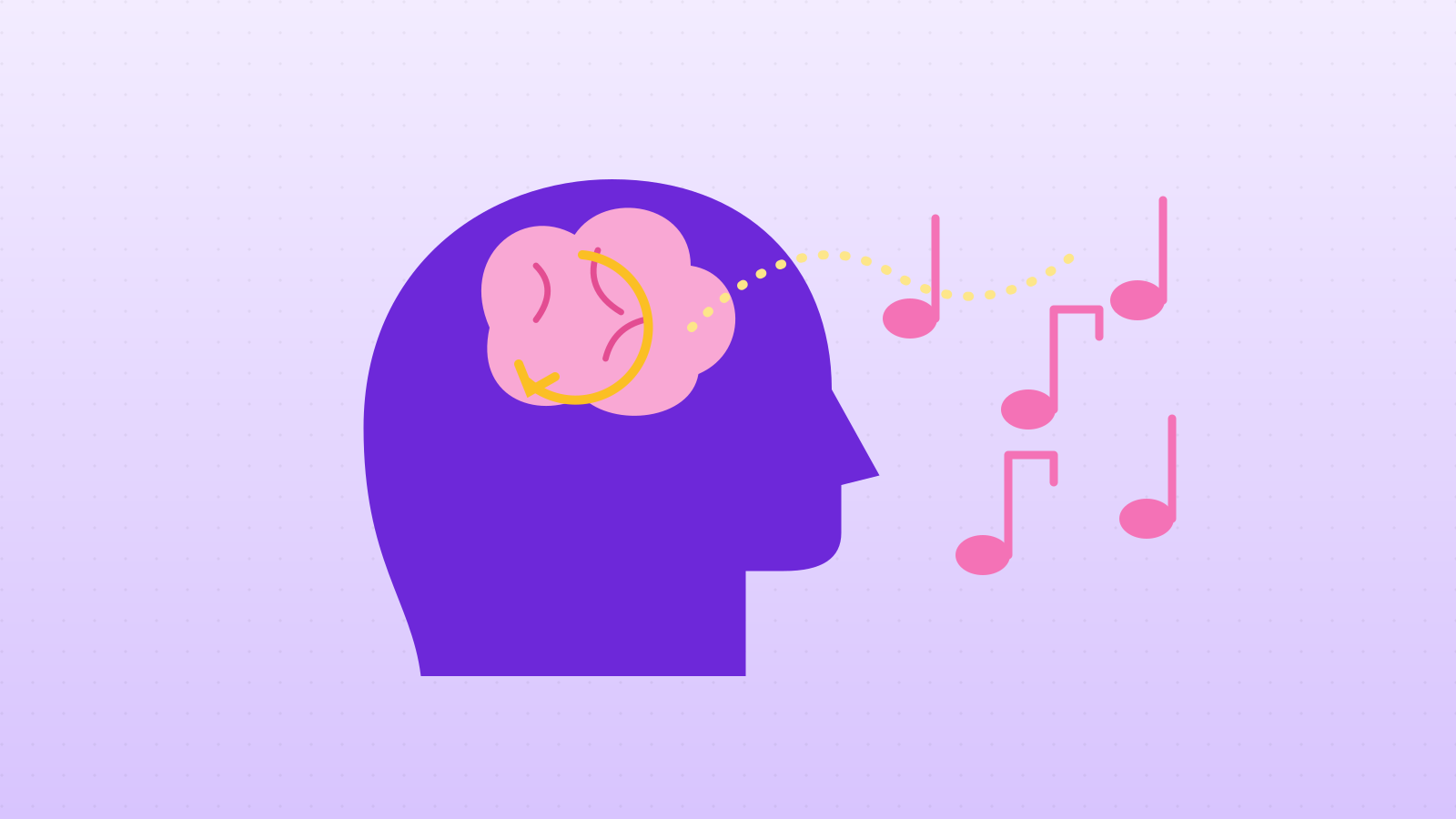
Why Do Songs Get Stuck in Your Head? The Science of Earworms
Why does a song loop in your mind for days? How earworms form, which songs stick the most, and the research-backed ways to get rid of them.
Why Do We Forget? The Forgetting Curve and Science-Backed Ways to Remember
Why do we forget what we learn so quickly? Ebbinghaus’s forgetting curve, the main reasons for forgetting, and the study methods that make memories last.

Why Can’t You Tickle Yourself? Your Brain’s Prediction Machine
Someone else’s fingers leave you helpless with laughter, but your own do nothing. The reason is your brain predicting the result of your own movements.

Why Is the Night Sky Dark? Olbers’ Paradox and the Age of the Universe
With billions of stars out there, why isn’t the night sky ablaze with light? Olbers’ paradox, the finite age of the universe and cosmic expansion, explained.

Why Do Leaves Change Colour in Autumn? The Science of Yellow, Orange and Red
Why do leaves turn yellow or red in autumn, and why do trees drop them? The pigments in leaves, colourful autumns and why America is redder than Europe.